What changes between these two 1800 mm display fridge sizes?
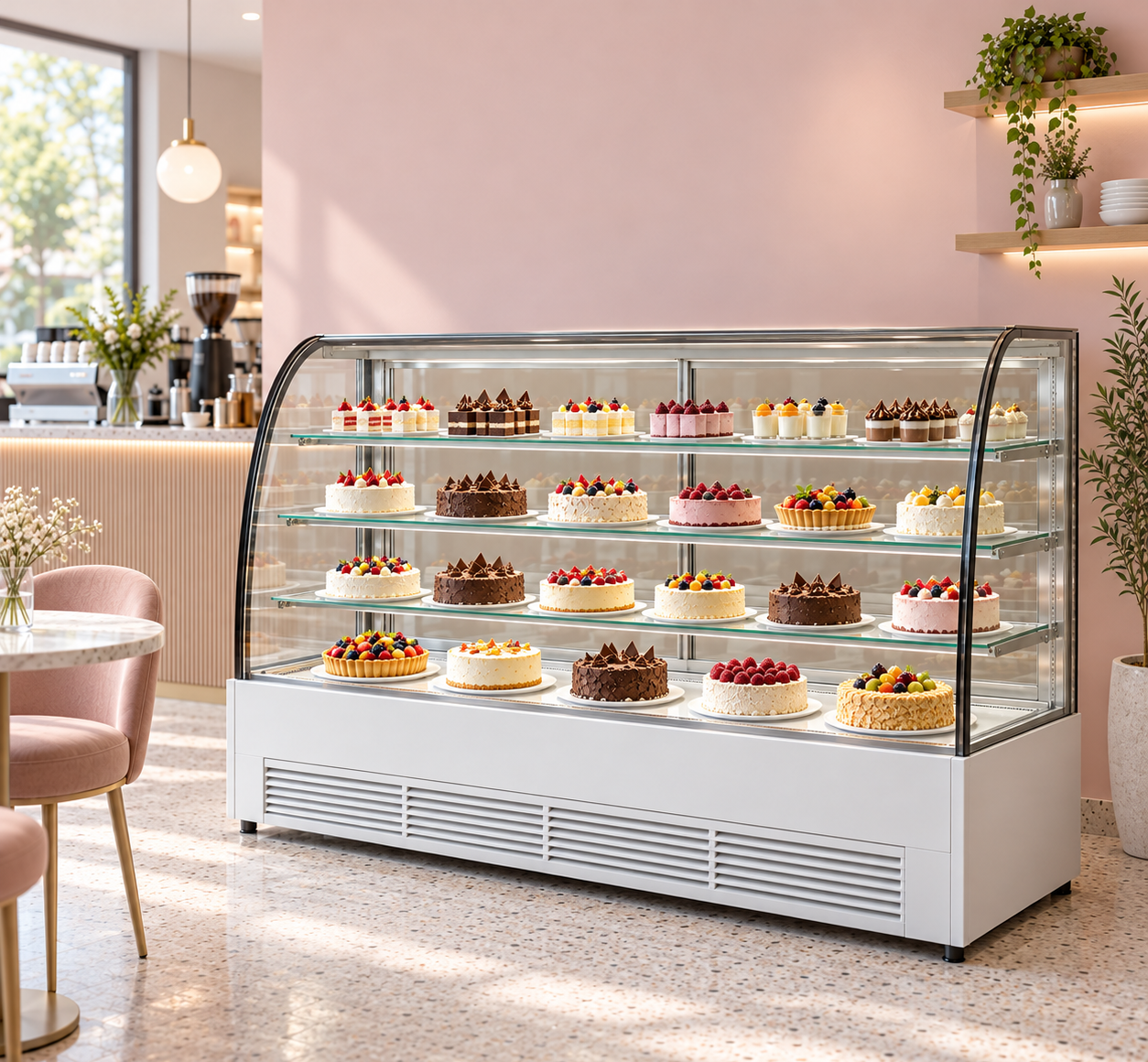
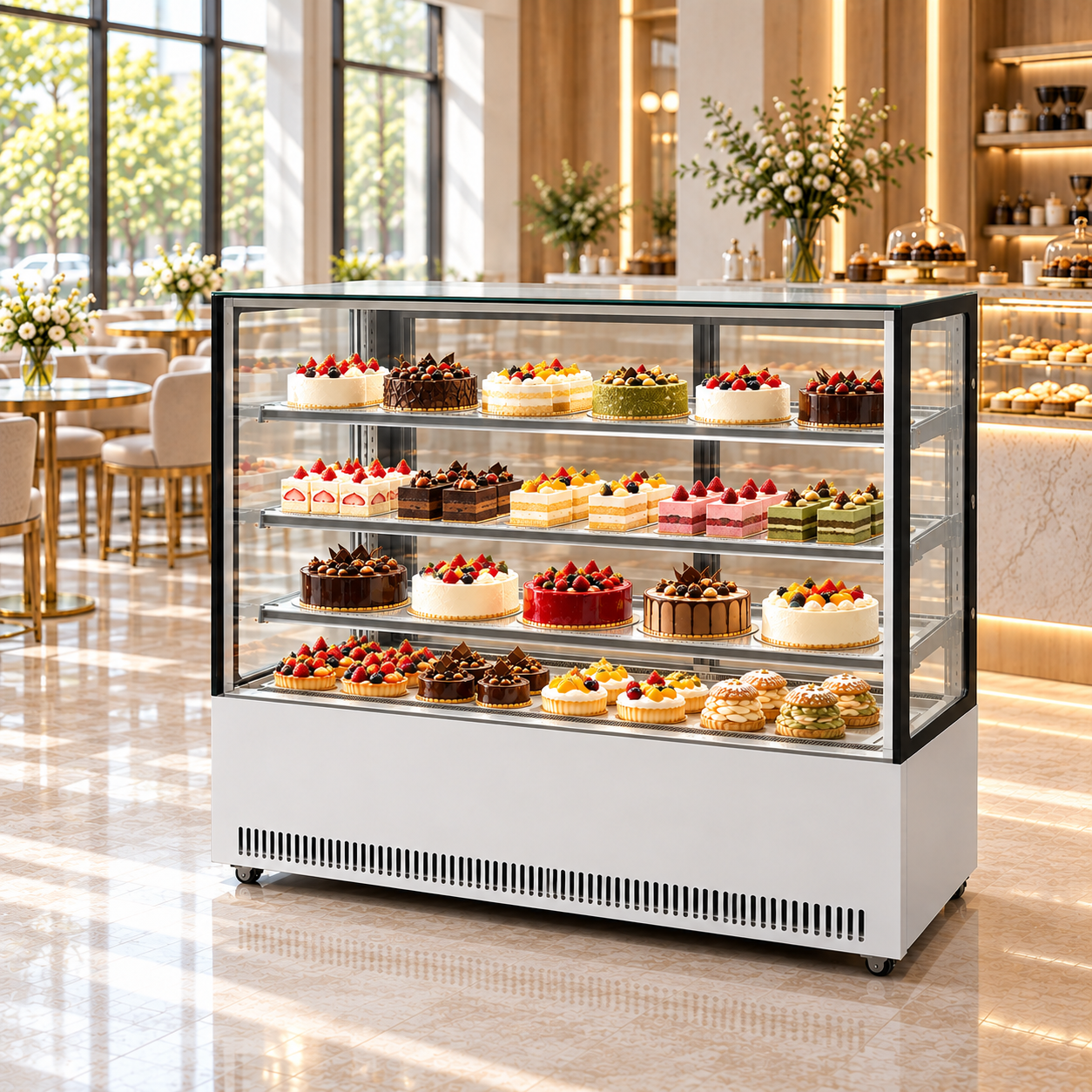
GN-1800C3 and GN-1800R3 have identical recorded exterior dimensions: 1800 mm wide, 730 mm deep and 1300 mm high. Both are freestanding displays with three glass shelves and two sliding doors on the service side. The visible distinction is the front glass: C3 has curved front glass with glass sides, while R3 has a straight glass front and sides. Their listed capacities are 550 L and 715 L respectively.
Start the shortlist with that shared body rectangle, then compare the internal arrangement against the products you intend to display. Selecting the straight-front cabinet adds 165 L of recorded capacity without changing the stated exterior dimensions. That difference does not establish a tray count, shelf depth or loading limit; those require measurements for the particular cabinet.
How much room remains in a 2000 by 1000 mm equipment bay?
For either cabinet, subtracting the 1800 mm body width from a 2000 mm bay leaves 200 mm of gross width balance. Subtracting the 730 mm body depth from a 1000 mm bay leaves 270 mm of gross depth balance. The body footprint is 1.314 square metres, calculated as 1.800 multiplied by 0.730 metres. The same arithmetic applies to C3 and R3 because their exterior sizes match.
Use these figures to draw the equipment outline before allocating the surrounding work areas. The 270 mm balance is only the difference between the two depth measurements. Show the staff serving position, cake-box packing surface and replenishment route separately, then obtain the installation drawing for the offered unit. A body that fits inside a rectangle has not yet been checked for practical service access.
Does 715 L mean the straight-glass cabinet holds more cake trays?
GN-1800R3 records 715 L, compared with 550 L for GN-1800C3, and both records list three glass shelves. Those facts support a capacity comparison, but they do not supply the usable width and depth of each shelf. A litre figure cannot establish whether two particular cake boards fit beside each other or whether a decorated cake clears the shelf above it.
Prepare one assortment list for both models. Measure every tray across its widest points, including rims and handles, and measure cakes with their boards, stands and decorations. Assign each item to a proposed shelf and ask JINYU for the corresponding usable dimensions and vertical gaps. Keep the lower display area as a separate line in the layout request so it is not confused with one of the three recorded shelves.
For example, two 320 mm cake boards placed side by side require 640 mm before any separation or edge allowance. Three require 960 mm. These are board-envelope calculations, not cabinet loading claims. Put the required arrangement beside the requested usable shelf width for each model. Repeat the check in depth and height, then retain the actual shelf drawing with the final assortment.
How should a bakery compare curved and straight front glass?
Compare GN-1800C3 and GN-1800R3 from the customer approach and from the staff service position. C3 records a curved front with glass sides; R3 records a straight front and sides. Both have the same 1300 mm overall height. Mark that height on an elevation beside the till, menu board and any adjacent display so the glass profile is considered in the actual counter arrangement.
Request photographs of the offered configuration from the front, each end and the staff side, with the intended tray layout identified. The existing photographs on this page show the two cabinet formats; they do not provide an internal dimension drawing. Keep any finish selection with the full model code when preparing the inquiry. Glass shape alone does not establish visibility from every position, shelf reach or available space for tall desserts.
Which cooling and electrical figures are the same?
Both model records list fan cooling, R290 refrigerant and a 2-8°C temperature range. Both list 640 W rated power and a 220-240V/50Hz electrical configuration. Carry those figures with the selected model number into the equipment schedule. There is no recorded power difference between these two cabinets, despite their different listed capacities.
Rated input is not a daily energy consumption measurement, so do not turn 640 W into an operating-cost comparison without operating data. Send the actual site supply and destination with the inquiry, and request the electrical and installation documents for the offered cabinet. Include the chilled-storage requirements of the intended cakes and pastries so the application discussion uses the product requirements alongside the cabinet record.
What should I send when choosing C3 or R3 for the same frontage?
Send a measured plan showing the 1800 × 730 mm body position and a side elevation showing the 1300 mm cabinet height. Label the staff side, the two sliding doors, the customer approach and the route to reserve stock. Add the largest tray or cake-board dimensions and a shelf-by-shelf assortment list, then identify whether the proposed front is curved GN-1800C3 or straight GN-1800R3.
If both models remain on the shortlist, request the same internal measurements for each: usable shelf widths, depths, vertical gaps and service opening dimensions. Include photographs of the receiving entrance and route to the final position, with shipment-specific packed measurements requested separately. Attach the site electrical supply to the brief. Keeping these documents together lets the comparison move from identical exterior dimensions to the actual loading and service arrangement.