Buyer planning guide
Travel Bag Shoulder Strap: Specification Worksheet
Specify a travel bag shoulder strap with defined length endpoints, webbing and pad dimensions, labelled connectors and a row-by-row proposal comparison worksheet.
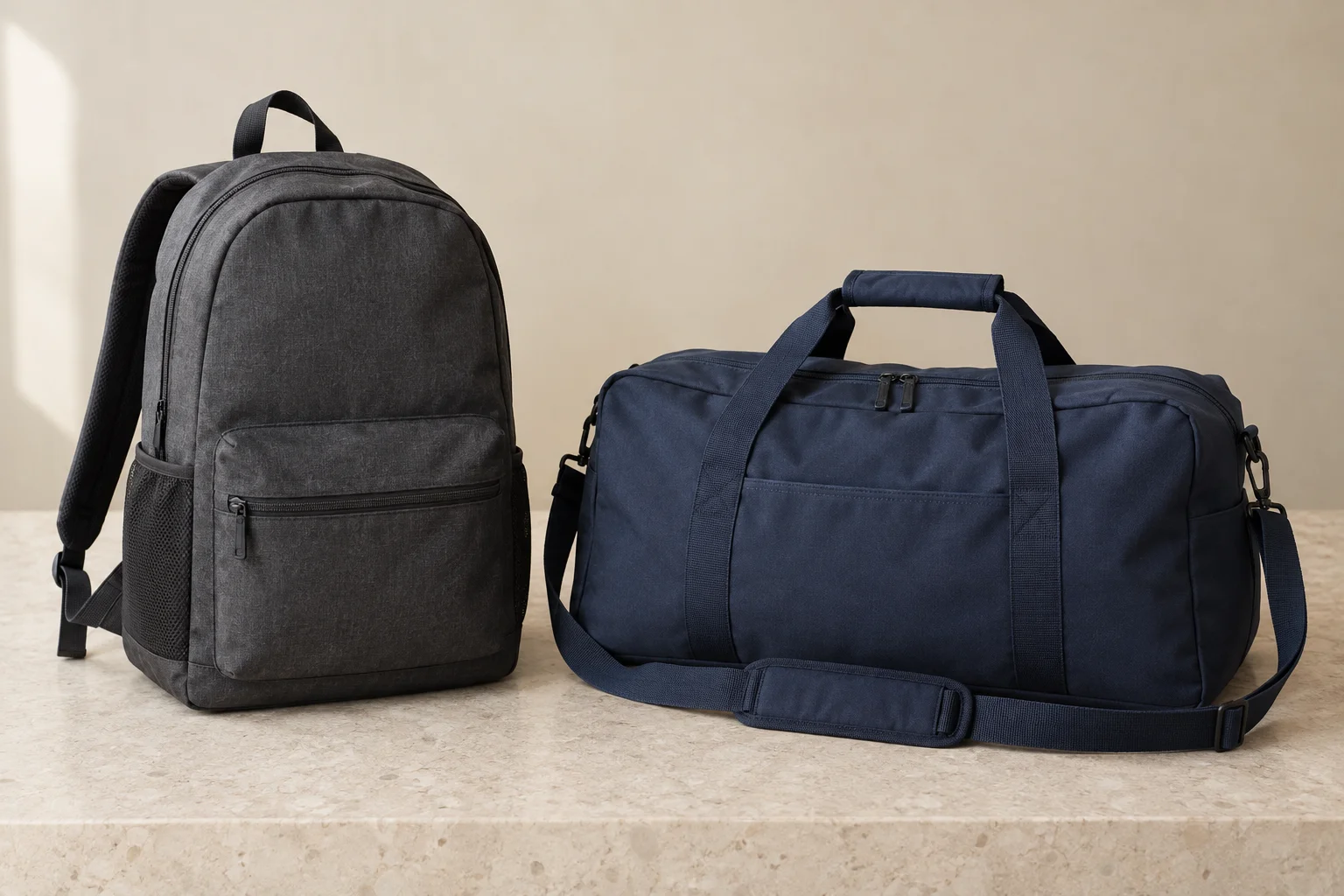
Travel bag shoulder strap specification worksheet
Use these rows in your inquiry. Add columns for your requested value, each proposed value, the document revision and the question to resolve. These are specification fields, not standard JINYU product dimensions.
| Part or feature | What to specify | Supporting record to request |
|---|---|---|
| Length range | Complete assembly endpoints; shortest and longest settings | Endpoint drawing and laid-flat measurement photos |
| Webbing | Width, material description and colour reference | Proposed material description and identified colour sample |
| Shoulder pad | Included or omitted; size and fixed or sliding position | Pad drawing and position at both settings |
| Adjustment | Fitting reference, threading route and loose end | Both-face fitting photos or drawing |
| End connectors A/B | Detachable arrangement and matching bag connections | Connector dimensions and open/closed views |
| Bag attachments A/B | Locations, attachment construction and backing | Bag drawing and attachment detail |
| Performance evidence | Intended contents and any stated performance requirement | Assembly-specific document and sample reference |
What should a travel bag shoulder strap specification include?
Describe the complete carrying assembly: webbing, adjustment fitting, end connectors, shoulder pad if requested, and the attachment points on the bag. Give each part a label on the same drawing. A request for a long adjustable strap leaves the measurement method and the included components unresolved. Use the worksheet below to request an offered value against each required feature before comparing proposals.
This guide is for writing that specification before a custom travel bag proposal is settled. The separate sample-review guide covers handling the finished sample. Keep the strap worksheet with the bag drawing, because moving a bag attachment changes the carrying arrangement even if the removable strap remains identical. Record a revision for both documents and ask the reply to identify them.
How do I define the shortest and longest strap lengths?
Choose endpoints first. One method is to measure the complete detachable assembly from the inside bearing surface of one end connector to the corresponding surface of the other. Show those points on a drawing and photograph. Record the shortest and longest usable adjustment settings with the strap laid flat, then record webbing length separately if it is needed for construction discussion.
For a hypothetical comparison, a buyer drawing might request 1200 mm between connector bearing points while a reply gives 1200 mm of webbing. The matching numbers do not establish matching assemblies: the fittings and adjustment path are outside that webbing-only description. Ask for a measurement using the drawing endpoints. These numbers illustrate a specification mismatch; they are not JINYU product dimensions or recommended strap lengths.
Which width, pad and adjustment details belong on the drawing?
Record webbing width independently from pad width. Identify whether the proposed pad slides along the strap, is fixed in place or is omitted. If a pad is requested, show its length, width, position and the face intended to contact clothing. A wide pad in a photograph does not tell the buyer the width of the webbing passing through it.
Show the adjustment fitting and webbing route from both faces. Ask the proposal to identify the loose-end arrangement at the shortest and longest settings. Include the intended carry position and clothing in the brief so the sample can later be reviewed against the same use. Select actual requested dimensions from your design and user review rather than copying a generic strap range into every bag version.
How do I specify connectors and bag attachment points together?
Label the strap ends A and B and give the matching bag connections the same labels. Describe whether each end is requested to detach, whether rotation is needed and which parts are included with the bag. Ask for connector drawings or close photographs showing the opening, closed arrangement and the surface that bears against the bag connection. A colour description alone does not identify a fitting.
For each bag attachment, show its location relative to a seam or another fixed drawing reference. Ask the response to describe the attachment construction and any internal backing included. Keep connector compatibility and bag attachment construction as separate worksheet rows. An end connector that closes around a ring does not, by itself, establish the strength of the ring attachment or the complete bag.
Can strap appearance establish carrying capacity or durability?
Appearance can document the selected shape, colour and visible construction, but cannot establish a carrying capacity. If the intended use includes a performance requirement, state the contents and intended conditions, then request relevant evidence for the proposed assembly. Record which components and bag attachment construction that evidence covers. Keep any reported test result tied to its sample, method and document reference.
Do not turn a stated webbing property into a claim about the complete bag. Connectors, adjustment fittings, stitching and body attachments form part of the carrying arrangement. Likewise, a hand-carried sample observation is a use observation rather than a quantified durability result. Separate the proposed specification, observed behaviour and documented performance evidence in the purchasing record so none is silently substituted for another.
How should I compare two strap proposals in one worksheet?
Keep your requested specification in a fixed column and give each response its own offered-value column. For each row, add the response document reference and a specific follow-up question. Compare length endpoints before comparing length figures, and compare included parts before treating two descriptions as the same arrangement. An omitted pad and a sliding pad are different scopes even when the webbing description matches.
Assign differences to the relevant row instead of summarising a proposal as matching the reference. For example, a reply may describe webbing width clearly but leave the connector opening unspecified. Retain the width response and ask only for the missing connector information. When a revised proposal arrives, identify the changed rows and preserve the earlier document reference so the comparison remains traceable.
What information should accompany a strap specification inquiry?
Send the travel bag body drawing, contents list, intended carrying method and labelled strap worksheet together. Include views locating attachments A and B, the requested adjustment endpoints, artwork or colour references, quantity by bag version and destination. Identify whether the request covers a complete custom travel bag with its strap or asks about a separate component; those are different supply scopes to discuss.
For JINYU custom backpacks and travel bags, the project brief also records external dimensions, compartments and opening arrangement. Keep these details attached rather than submitting only a strap photograph. A reference image explains a preference; the written response establishes what is being proposed.
How do I carry the agreed specification into sample review?
Give the sample its own identifier and connect it to the returned bag drawing and strap worksheet revisions. Measure using the agreed endpoints, identify the actual connectors and photograph both bag attachments. Record observations against the same worksheet rows so a construction change is visible without rewriting the entire brief. Use the separate travel bag sample-review guide for carrying and opening observations.
If the body shape, attachment location or connector changes, identify which parts of the earlier review are affected. Update the drawing and proposal record together. Keep requested changes separate from observations about the current sample, and ask for a response against each change. The resulting record should identify one complete proposed assembly, rather than combining measurements from several samples into a specification that none of them represents.
Reference sources
- Compare connector and bag ring pairings
- Review the finished strap and bag sample
- Prepare the complete custom bag project brief
- Explore custom backpacks and travel bags
- Send a specification inquiry
Regional references support general planning; model-specific specifications come from the published JINYU model tables.