Plain non-woven
The fabric colour and texture, with no outer film. Keep it plain or add a logo.
Compare plain tote sizes → JINYUCommercial equipment & packaging.
Materials & details
PP means polypropylene. Fibres are bonded into a sheet, rather than woven or knitted. Non-woven describes the construction, not the polymer: a polyester sublimation blank is a different material from a PP bag. If your brief says spunbond or TNT, confirm the polymer, GSM, finish and intended printing method before matching it to a PP reference.
Choose the fabric, seams and handles around the contents - not GSM alone. Confirm the print process on the actual material and a representative sample; do not transfer press settings from a different blank. Plan artwork and sample checks →
Cotton canvas and PP non-woven are different materials. A mockup cannot confirm composition. Cloth bags need their own material and construction specification for a quotation. Compare cotton canvas and PP non-woven →
Back to your selected size →Set a valid quantity on your selected bag before preparing email or WhatsApp.
Have dimensions in mind? Compare the non-woven bag size chart →
Compare the material directions ↓Material terminology: EDANA's nonwoven fabric overview.
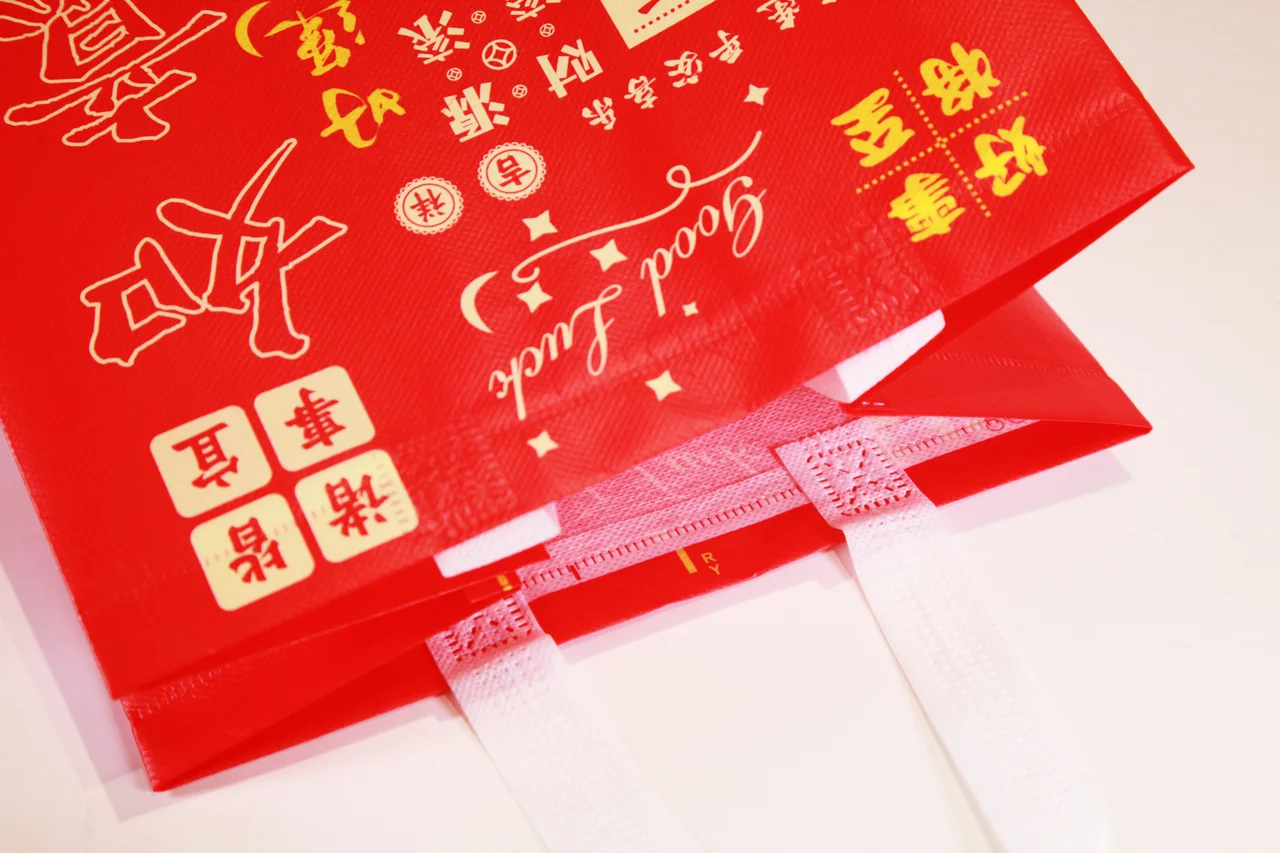
Different construction, different brief
The fabric colour and texture, with no outer film. Keep it plain or add a logo.
Compare plain tote sizes →An outer film for a different finish and broader artwork - not a universal upgrade.
Explore laminated bags →An inner lining, not the outer print finish. Confirm layers and packaged-food requirements separately.
Compare foil-lined references →Useful to know
For environmental wording, the US FTC Green Guides summary distinguishes recycled content, recyclability and compostability. It is guidance on claims, not certification of our bags. Check requirements for your destination market.
Do not treat a PP non-woven bag as biodegradable or compostable simply because it looks like fabric. PP is polypropylene, and the term non-woven describes how the fabric is made, not how it breaks down. If your project requires compostability or another environmental claim, name the destination market, applicable standard and intended disposal route so the actual product and supporting evidence can be checked before quotation.
These are different questions. Recycled content concerns what went into the bag; recyclability concerns whether the finished bag can be collected and processed after use. The PP name alone does not establish either claim for a finished bag. Check the material composition, handles, inks and any laminated or foil layers, plus acceptance by the local recycling service. A requested recycled-content percentage needs evidence for the supplied specification.
Do not assume that a PP fabric or laminated surface makes the whole bag waterproof. Seams, openings, handles and the complete construction need to suit the intended exposure. For repeated use, describe the contents, expected load and handling conditions; check a representative finished sample. GSM alone does not establish carrying capacity, washability or a guaranteed number of uses.
Both can use polypropylene. Woven fabric interlaces yarns or tapes; non-woven fabric bonds fibres into a sheet. Our standard size guides cover PP non-woven bags, not a woven equivalent. A similar shape or glossy surface does not establish the same fabric. Send a close-up and dimensions when matching an existing bag.
No. Cotton names a fibre, canvas a woven construction, and PP non-woven a polypropylene fabric with bonded fibres. Canvas may also contain other fibres, so confirm composition rather than judging from a photograph or mockup. Our published size guides apply to the stated PP non-woven products; they are not cotton or canvas quotations. A cloth-bag brief needs its own composition, fabric weight, dimensions, seams, handles, artwork and sample review. Send the material composition and construction requirements with your inquiry for a quotation and sample review.
No. Lamination describes an outer film or finish, not whether the fabric underneath is woven or non-woven. Our laminated bag references use an outer film for artwork; foil-lined takeaway references have an inner lining. Neither description establishes temperature duration or food-contact suitability. A photograph can show a glossy or diamond-patterned appearance, but cannot confirm raised texture, layer structure or how the pattern is formed. If texture or stiffness matters, share close-up and reverse-side images and, where possible, a physical reference. Review the proposed material and construction in a sample before proceeding with production.
No. GSM means grams per square metre: it describes fabric mass per area, not a measurement of thickness or the weight or load rating of a finished bag. Materials with the same GSM need not have the same feel or stiffness. When matching an existing bag, compare a retained physical sample and confirm the fabric, surface layers and finished construction separately. Consider the dimensions, seams, handles and contents, then check an appropriate sample.
Use a brand colour reference or physical sample when colour matters. Website images are illustrative and are not a production colour standard.
State the exact requirement before quotation. It must be checked for the actual material and order; no universal certification is claimed for all bags.