Which three-shelf curved-glass display fridge sizes are available?
This shortlist covers six JINYU freestanding cabinets with curved front glass, glass sides and three glass shelves. GN-900C3 and GN-1800C3 provide the 900 and 1800 mm endpoints. CK3 supplies 1000, 1200 and 1500 mm widths, while GN-1200CF3 offers another 1200 mm option. All six stand 1300 mm high. The C3 and CF3 models are 730 mm deep; the CK3 cabinets are 740 mm deep.
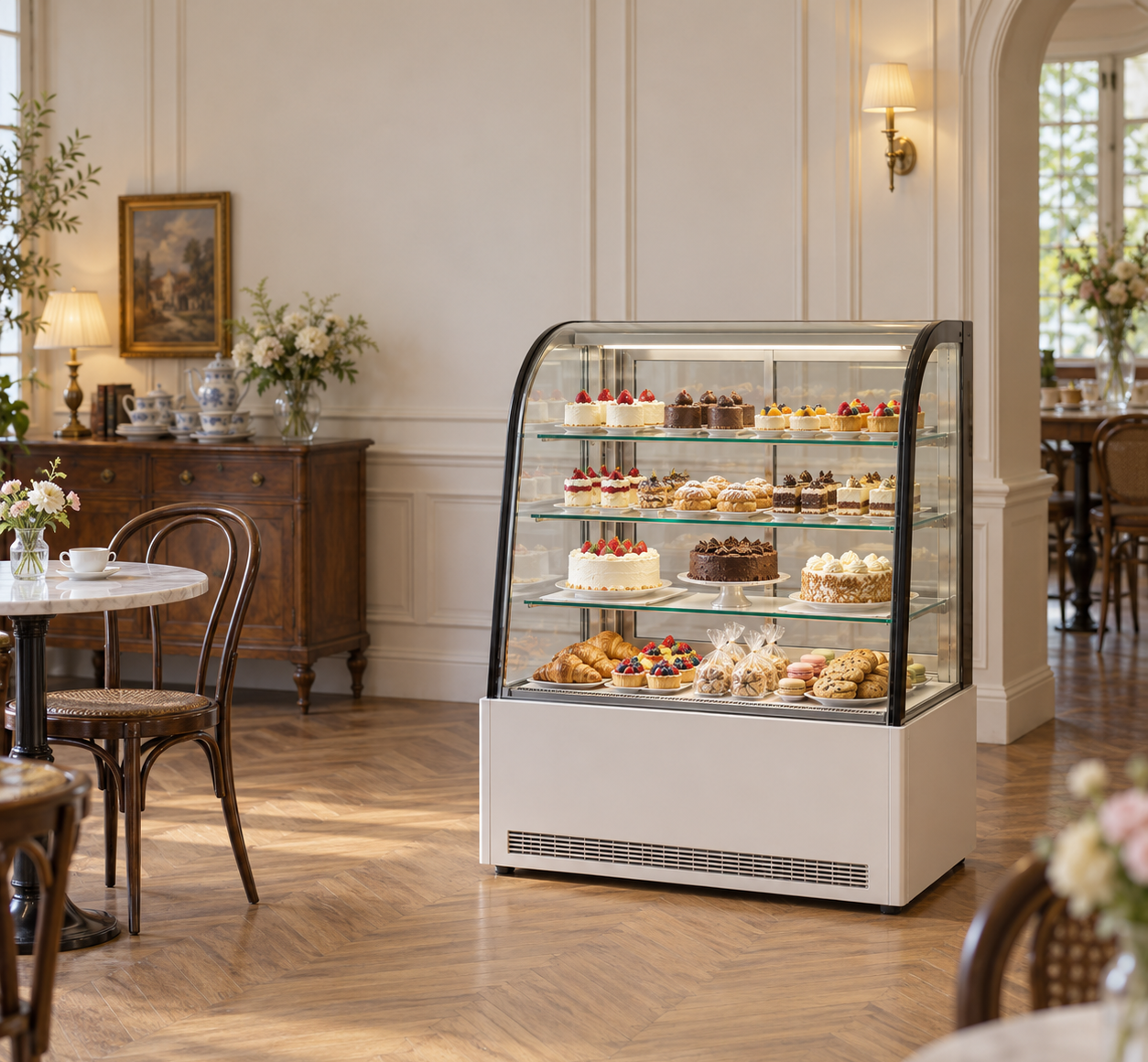
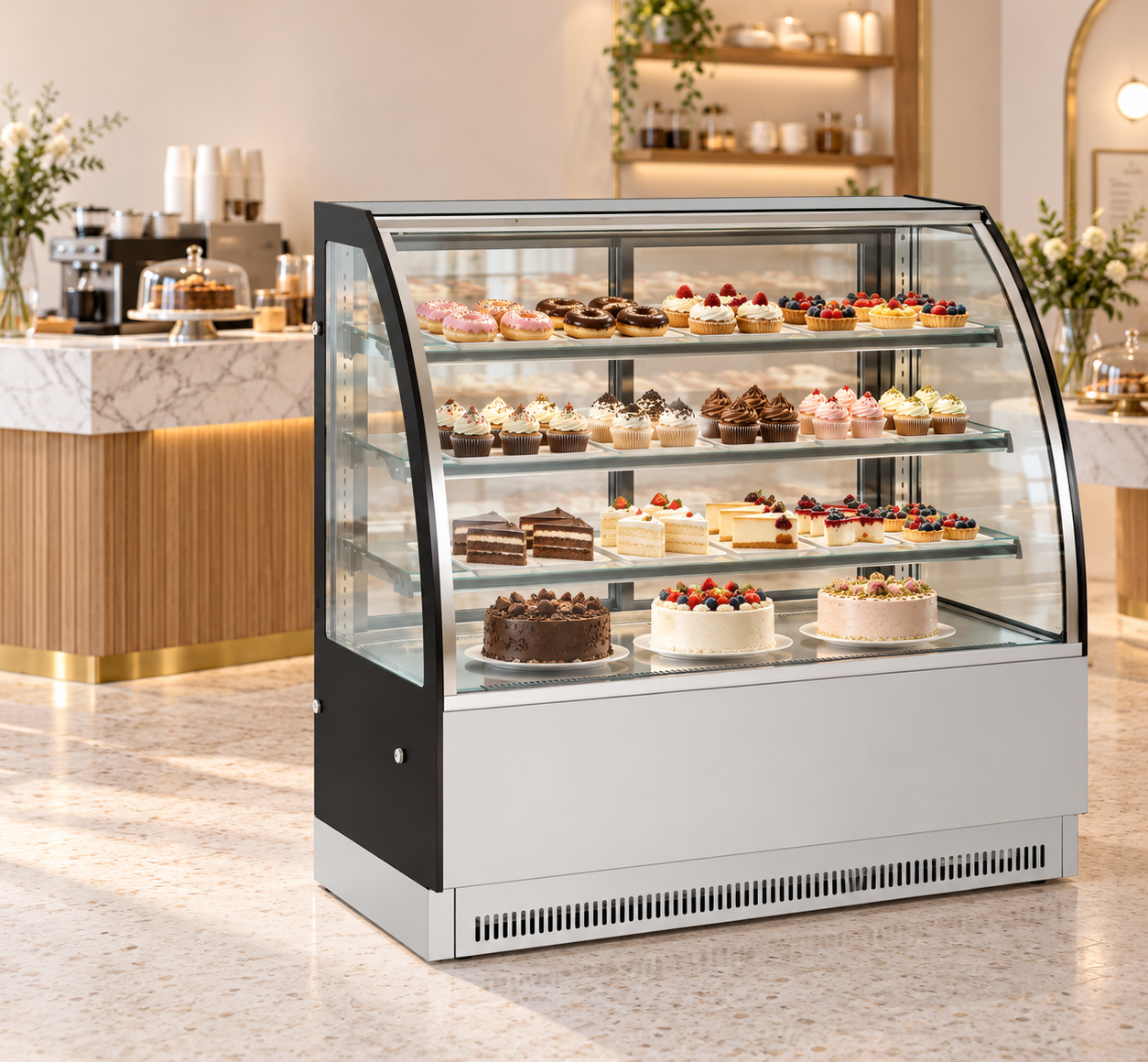
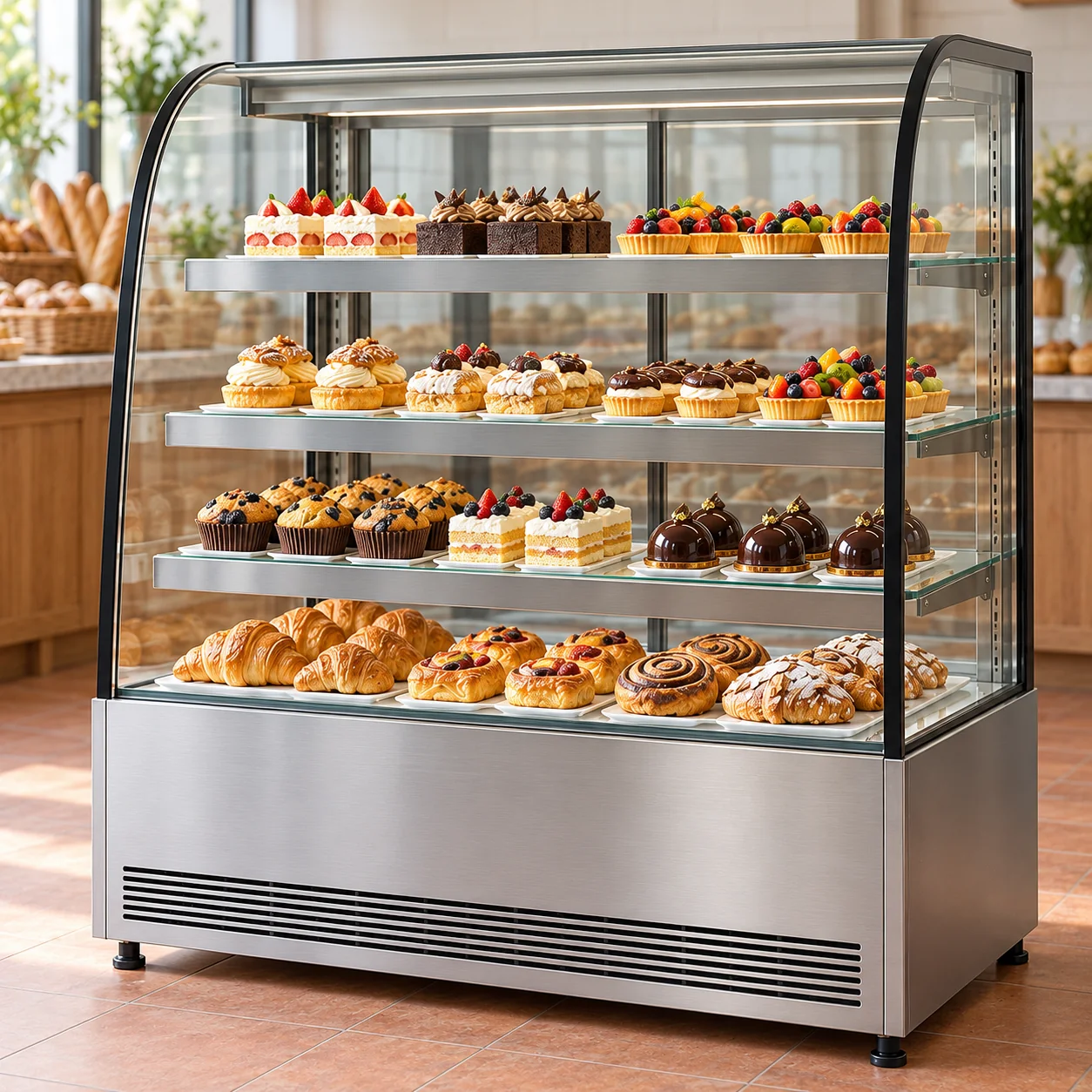
Start with the width available at the intended equipment position, then compare the complete model codes in the table. These records cover the six cabinets listed here. A shared curved-glass profile and shelf count make them relevant to the same shortlist, while the depth, capacity and power figures distinguish the individual models. Use the linked photographs to review each cabinet alongside the size schedule.
What changes between the two 1200 mm curved-glass cabinets?
GN-1200CF3 measures 1200 × 730 × 1300 mm, lists 385 L capacity and records 470 W rated power. GN-1200CK3 measures 1200 × 740 × 1300 mm, lists 400 L and records 515 W. CK3 is 10 mm deeper, with 15 L more listed capacity and a 45 W higher rating. Their widths, overall heights and three-glass-shelf counts match.
The calculated body footprints are 0.876 and 0.888 square metres respectively, a difference of 0.012 square metres. Draw both depth lines on the same plan so the difference is visible beside the adjacent counter. Request usable shelf dimensions and the service-opening dimensions for each full model code. The extra 10 mm of exterior depth does not identify an increase in usable shelf depth, and the litre difference alone does not establish a larger cake-board arrangement.
How do the 900 and 1000 mm options compare in a narrow frontage?
GN-900C3 uses 900 × 730 mm of body footprint, calculated as 0.657 square metres. It lists 355 L capacity and 460 W. GN-1000CK3 uses 1000 × 740 mm, or 0.740 square metres, and lists 385 L with 470 W. Moving to the CK3 therefore adds 100 mm of width, 10 mm of depth, 30 L of listed capacity and 10 W of rated power. Both remain 1300 mm tall.
In an illustrative 1600 mm equipment run, subtracting the body widths leaves 700 mm beside GN-900C3 or 600 mm beside GN-1000CK3. Those are gross remainders. Allocate installation spaces and adjoining furniture on the drawing before assigning a packing surface. A narrow cabinet can release frontage for another activity; the model comparison should retain both the equipment outline and the planned use of that remaining length.
When should I compare the 1500 and 1800 mm cabinets?
GN-1500CK3 measures 1500 × 740 × 1300 mm and records 460 L with 530 W rated power. GN-1800C3 measures 1800 × 730 × 1300 mm and records 550 L with 640 W. The wider C3 adds 300 mm of frontage and 90 L of listed capacity while reducing the cabinet depth by 10 mm. Their calculated body footprints are 1.110 and 1.314 square metres.
Use the wider pair when the proposed assortment or display run calls for more frontage than the 1200 mm alternatives. Put the same tray, plate and cake-board list against both shelf drawings. Mark the staff packing position and the transfer route from each sliding service door. The 300 mm width difference changes the equipment run; compare it with the actual furniture plan rather than assuming the two cabinets can occupy an identical position.
Can I select a cabinet from capacity and three shelves alone?
GN-1000CK3 and GN-1200CF3 both list 385 L, although the CF3 is 200 mm wider and 10 mm shallower. This is a useful example of why a capacity match cannot replace a size comparison. Both records specify three glass shelves, yet the outside dimensions still differ. Carry the complete model identity through every shelf-layout request.
Measure each tray or board at its widest points, including handles and rims, and record the finished product height with decorations. Number the requested shelf positions and place each assortment item on the returned drawing. Ask for loading-opening measurements and a demonstration of the intended loading movement. Keep the usable shelf measurements with the arrangement that was reviewed. This gives the purchasing team a product-by-product comparison rather than a cake count inferred from litres.
Which refrigeration, electrical and service details should stay in the brief?
Each of these six model records specifies fan cooling, R290 refrigerant, a 2-8°C temperature range and 220-240V/50Hz supply. All record two sliding doors on the service side. Keep those doors facing the staff work position on the plan and show the packing table, access route and neighbouring equipment. Request installation documents for the selected configuration when setting the surrounding spaces.
Rated power varies from 460 W for GN-900C3 to 640 W for GN-1800C3 in this shortlist. Record the exact model rating on the equipment schedule and attach the destination supply details. Rated watts do not provide daily energy consumption. A comparison of energy use needs the offered configuration and its consumption evidence with test conditions, while the site connection review uses the electrical documents for that same configuration.
What should I send for a C3, CF3 or CK3 size comparison?
Send the full model codes being compared, equipment quantities, available frontage and a plan showing the 730 or 740 mm body depth. Add a side elevation with the 1300 mm cabinet top marked beside adjacent furniture. Attach tray and cake-board dimensions, finished product heights, destination and site supply information. Ask for shelf and installation drawings against the same layout revision.
For a 1200 mm comparison, name GN-1200CF3 and GN-1200CK3 separately and retain their different capacity and rated-power entries. Shaanxi Jinyu Kitchenware Co., Ltd. (陕西金宇厨具有限公司) can associate that brief with the selected JINYU models. Include shipment-specific packed dimensions and gross weights in the receiving request; the body dimensions in this table describe the equipment position, while package measurements describe the units that travel through the receiving route.