Buyer planning guide
Buyer-arranged Pickup of Commercial Kitchen Equipment: Handover Checklist
Prepare a buyer-arranged kitchen equipment collection: match order lines to package labels, reconcile a three-package example and connect carrier and receiving records.
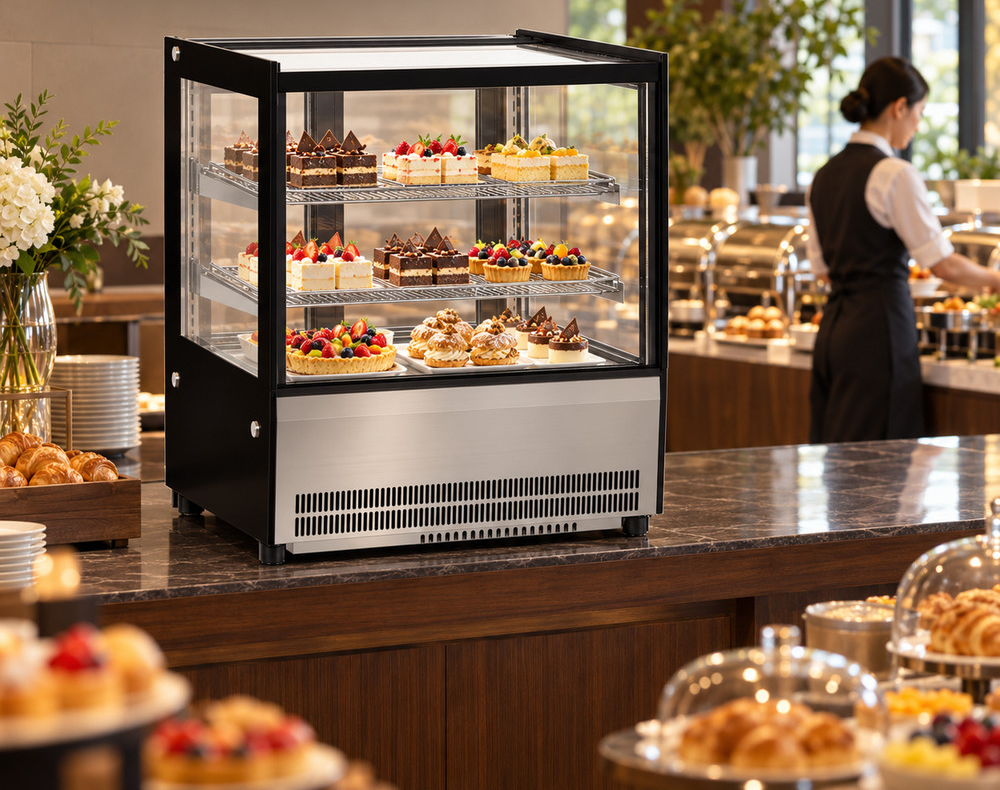
Worked collection sheet: two equipment units, three scheduled packages
| Order line | JINYU model | Scheduled package | Example collection entry | Record to retain |
|---|---|---|---|---|
| 1 · one cabinet | GN-660RT | P1 · cabinet | P1 presented | Package label and handover reference |
| 2 · one cabinet | GN-1200RT | P2 · cabinet | P2 presented | Package label and handover reference |
| 2 · accessories | GN-1200RT order line | P3 · accessory pack | P3 absent from presented set | Dispatch reply and revised movement instruction |
Example reconciliation: 2 presented packages ÷ 3 scheduled packages. The two cabinet lines remain unchanged while the P3 question is recorded separately.
What should a buyer-arranged kitchen-equipment pickup handover record contain?
Connect the collection instruction to the physical packages: order reference, full model codes, quantities, package identifiers, collection point and the party collecting. Keep the collection reference beside the transport booking reference when they differ. Record the document revision used by the collecting party and the dispatch contact. This gives both contacts a shared list to read at handover instead of relying on a cabinet name in a message.
A buyer-arranged pickup brief should describe the collection activity explicitly. Ask the respondent to identify the collection location, reporting instructions, loading activity and handover record. The actual response establishes which activities are offered. Use the worksheet below to compare the expected package identifiers with the identifiers presented, then retain the dated collection record with the destination receiving instructions.
How do I connect cabinet model codes to package identifiers?
Start with equipment lines, then add the package schedule supplied for the shipment. GN-660RT is a countertop cabinet measuring 660 × 530 × 730 mm with 102 L listed capacity. GN-1200RT is a countertop cabinet measuring 1200 × 530 × 730 mm with 190 L listed capacity. These catalogue measurements identify the equipment being discussed; the shipment schedule supplies packed dimensions, gross weights and the relationship between packages and equipment lines.
Keep separate fields for equipment quantity and package count. One cabinet line can have separately packed accessories, while a document may group several items under one package identifier. Copy the actual relationship from the returned schedule. Ask for an explanation where a package label and the equipment schedule use different references. Use the full model code in that question so the answer can be filed against the correct cabinet.
How would a worked collection reconciliation look?
Consider an illustrative order with one GN-660RT and one GN-1200RT. Suppose the shipment schedule identifies P1 as the GN-660RT cabinet, P2 as the GN-1200RT cabinet and P3 as a separate accessory pack for order line 2. That example has two equipment units and three packages. The P1-P3 references are worksheet examples; the actual shipment may be packed differently.
At collection, enter each presented identifier in its own row. If P1 and P2 are presented while P3 is absent, the count is two packages against three scheduled. Name P3 in the question to the dispatch contact and record the reply beside order line 2. Preserve the distinction between an agreed separate movement and an unexplained difference. Update the collection instruction to reflect the documented arrangement rather than silently changing the expected count to two.
What should the collecting carrier receive before attending?
Give the appointed carrier the actual collection point, reporting contact, booking reference and shipment package schedule. Include packed dimensions and gross weights for each package, together with the model-specific handling information supplied for the movement. Ask the carrier to describe the collection and loading arrangement it proposes against those documents. Keep that response with the collection instruction and identify who coordinates any remaining question with the dispatch contact.
Cabinet body dimensions do not establish a vehicle choice or a loading method. For example, the GN-660RT body depth of 530 mm says nothing about the packed depth or the equipment used to move its package. Record the returned cargo figures separately. Where the collecting party changes, issue the current instruction and package schedule to that party through the project's agreed contact route.
What evidence belongs in the package handover record?
Record the presented package identifiers, counted packages, date, collection reference and the people or organisations identified on the handover document. Where photographs are taken, connect an overall package view and readable label view to the same package row. Describe a visible packaging difference in concrete terms, such as a torn corner on the photographed face, and attach the image reference. Keep that observation distinct from a conclusion about the condition of equipment inside.
Compare the actual handover document with the collection instruction before filing it. If a package identifier differs, retain both values and the written explanation. Questions about acceptance wording, carriage terms or responsibility belong with the parties arranging that movement. This worksheet records the equipment and packages; it does not establish contractual terms or replace the transport provider's documents.
What changes when collection and destination delivery use separate providers?
Give each movement its own reference and endpoint. A first carrier may collect at the named dispatch location and hand over at a warehouse; another provider may move the packages from that warehouse to the restaurant. Copy the package identifiers into both movement records so the restaurant can trace which packages passed through the intermediate point. Record a changed identifier with its cross-reference if a package is relabelled there.
Send the destination team the package schedule revision used at collection, the handover record and any documented separate movement. The receiving team can then compare the expected packages with the arriving set. Keep indoor movement, unpacking and placement on the counter as separately described activities. For GN-660RT, reaching the restaurant entrance and placing the cabinet on its prepared support are different points in that journey.
What should I send JINYU for a buyer-arranged pickup inquiry?
Send full model codes and quantities, the requested collection endpoint, destination and the contact coordinating the buyer's carrier. Attach an equipment-line schedule and ask for the shipment package schedule and applicable collection instructions. If a carrier has already proposed a scope, attach that wording and identify the activity needing a response. Include the destination receiving plan when the collection arrangement needs to connect with another movement.
Address the equipment inquiry to JINYU, Shaanxi Jinyu Kitchenware Co., Ltd. (陕西金宇厨具有限公司). Keep the returned response beside the same order lines and collection reference. When a cabinet, package schedule or collecting party changes, mark the affected rows and circulate the revised collection instruction through the agreed project contact. Retain the final package reconciliation with the equipment record so a later receiving question can refer to the collection evidence.
Reference sources
- Reconcile cargo dimensions, volume and weight units
- Compare pickup and delivery quotation scope
- Prepare a receiving discrepancy report
- Match packing lists and shipping marks
- GN-660RT cabinet specifications
- GN-1200RT cabinet specifications
Regional references support general planning; model-specific specifications come from the published JINYU model tables.