What does fabric weight mean in a custom canvas tote brief?
Write the material description and its mass per unit area in separate fields. GSM means grams per square metre of fabric. It describes the fabric area, while a finished bag weight describes one complete object. A proposed fabric at 240 GSM therefore means 240 grams for one square metre of that material. It does not mean that every tote made from it weighs 240 grams. The amount of fabric and the other components determine what is included in the finished object.
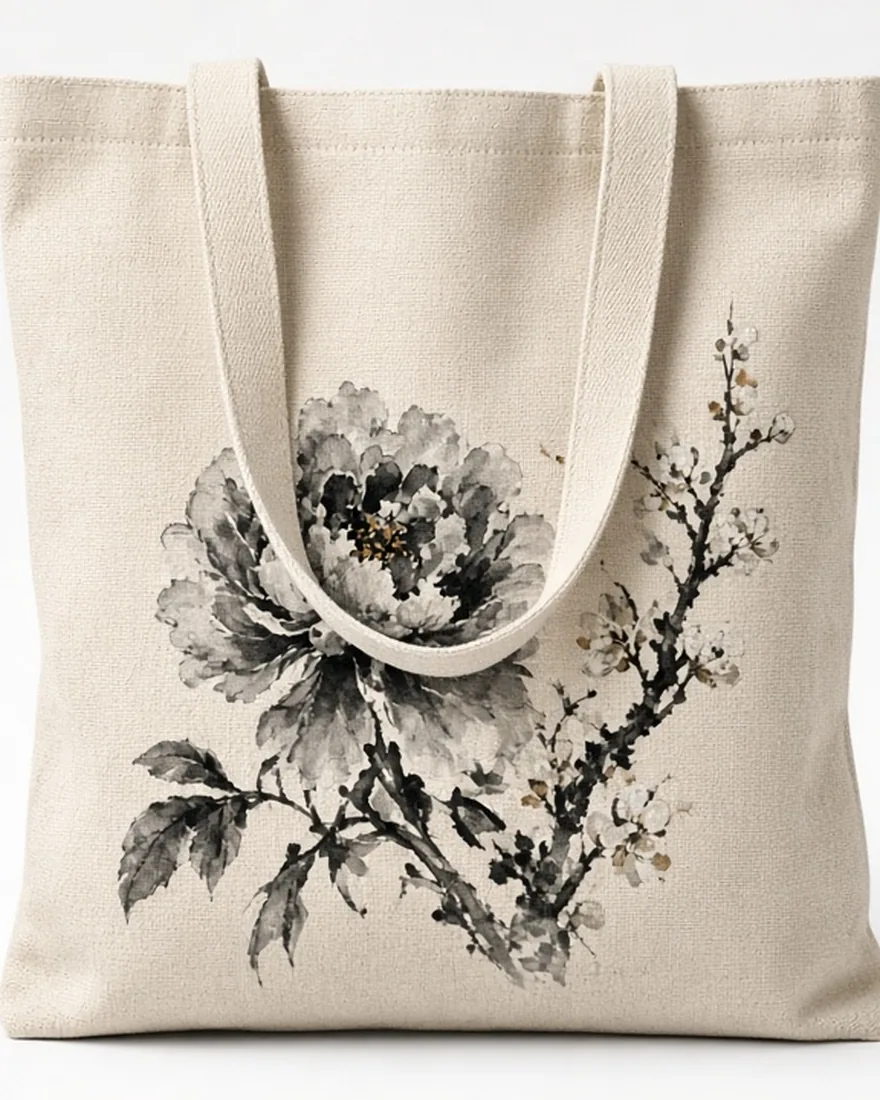
For a custom made canvas tote bag inquiry, identify the outer fabric, lining, handles and pocket materials individually. Ask the response to retain each component reference and state the proposed material description and GSM where supplied. Keep the buyer request beside the offered specification. A category photograph provides an appearance reference; the returned material schedule supplies the fabric information for the project.
How do I calculate the mass of a rectangular fabric panel?
Multiply cut width in metres by cut length in metres, then by the number of identical panels. Multiply that area by the fabric GSM to obtain a calculated mass in grams. For dimensions recorded in centimetres, area in square metres equals width times length times count divided by 10000. The worked table uses two illustrative 40 × 45 cm rectangles: 40 × 45 × 2 / 10000 = 0.36 square metres. At an illustrative 240 GSM, the calculated mass is 86.4 grams.
These rectangles are arithmetic inputs, not a JINYU tote pattern or a published fabric option. Use actual cut dimensions from the proposed pattern when reviewing a real design. Finished outside width and height belong on the product drawing; cut-panel dimensions belong on the pattern record. Identify which measurement each number represents before applying the formula.
Why is calculated panel mass different from finished bag weight?
The table covers only the named rectangles. A complete tote can include handles, pockets, lining, thread, labels, closures, decoration and other specified parts. Those components need their own records. Cut pieces can also contain material removed during construction. A sum of rectangular areas therefore describes the specified calculation, rather than a measured finished bag. Keep a physical sample weight in a separate field with the sample identifier and the items included when weighing it.
For example, record whether a loose base insert, detachable strap or presentation sleeve was included. Use the same inclusion list when comparing two sample revisions. If one observation includes packing and the other does not, preserve that distinction before comparing the numbers. Ask for the measurement method and unit with the returned sample result, and retain the original observation alongside any later calculation.
How can I compare two proposed canvas fabrics fairly?
Keep the same panel dimensions and count when comparing material weights alone. In the worked table, both alternatives cover 0.36 square metres. Applying 240 and 300 GSM gives 86.4 and 108.0 grams respectively, a calculated difference of 21.6 grams for those two rectangles. The second result is 25 percent above the first because the specified area is unchanged. Neither value represents a complete bag or establishes a fabric option offered by JINYU.
If a response also changes the tote size, lining or handle material, separate those changes from the GSM comparison. Retain a component list for each proposal rather than treating a heavier completed sample as proof of a heavier outer fabric. Identify the material swatch and its proposed specification beside the relevant proposal. Review colour and decoration using the artwork references for that same version.
Should seam allowances and fabric offcuts enter this worksheet?
Use the stated cut-piece dimensions when the purpose is to calculate the material in those pieces. If only finished dimensions are available, request the pattern dimensions instead of adding an assumed seam allowance. The top turn, base construction and handle folds can change the relationship between finished measurements and cut sizes. Identify a pattern revision with every set of cut dimensions so a later construction change does not keep the earlier area calculation unnoticed.
The worksheet does not calculate fabric purchased for production. Roll width, piece arrangement, print placement and offcuts require a cutting layout and its own material-consumption record. Keep that production response separate from the simple panel calculation. For an irregular piece, request its documented area or retain the named rectangular envelope as an envelope calculation. Do not describe an enclosing rectangle as the actual area of a shaped piece.
Does a higher GSM establish a carrying-load rating?
A fabric-area weight gives no numerical carrying-load rating for the completed tote. The brief also needs the selected construction, seams, handle attachments and intended contents. Keep a requested performance requirement and its supporting evidence separate from the fabric comparison. A heavier rectangle in this worksheet provides only an arithmetic mass difference for the stated inputs.
Describe the contents with their dimensions and weight, including any rigid box or projecting corners. Link that description to the sample and drawing revision used for the review. If performance evidence is requested, identify the complete bag configuration it covers. Review the returned evidence against the intended use rather than deriving a load figure from GSM, a photograph or the total mass of the sample. The seam-photo guide linked below helps record the attachment locations under discussion.
What belongs in the fabric-weight inquiry package?
Attach the finished-bag drawing, proposed component schedule, material references and panel worksheet. Give the requested quantity and destination in the main inquiry. State which rows contain buyer requests, which contain returned proposals and which record measured samples. Include the drawing revision, material document and sample identifier so a response can be matched to the correct tote version. Save the original sheet before recording an alternative proposal.
JINYU offers canvas totes as custom projects; small-quantity non-woven enquiries follow the stock route. Choose the relevant category and keep those routes identifiable in a mixed request. JINYU is the brand of Shaanxi Jinyu Kitchenware Co., Ltd. (陕西金宇厨具有限公司). Use the inquiry page to send the project details and the specific material questions. The downloadable CSV supplies blank project fields alongside the clearly marked arithmetic example.