Buyer planning guide
Custom Bag Inquiry: Seam Construction and Sample Photo Record
Prepare a custom bag inquiry with numbered seam locations, inside and outside photo references, proposed edge finishes and an editable sample construction record.
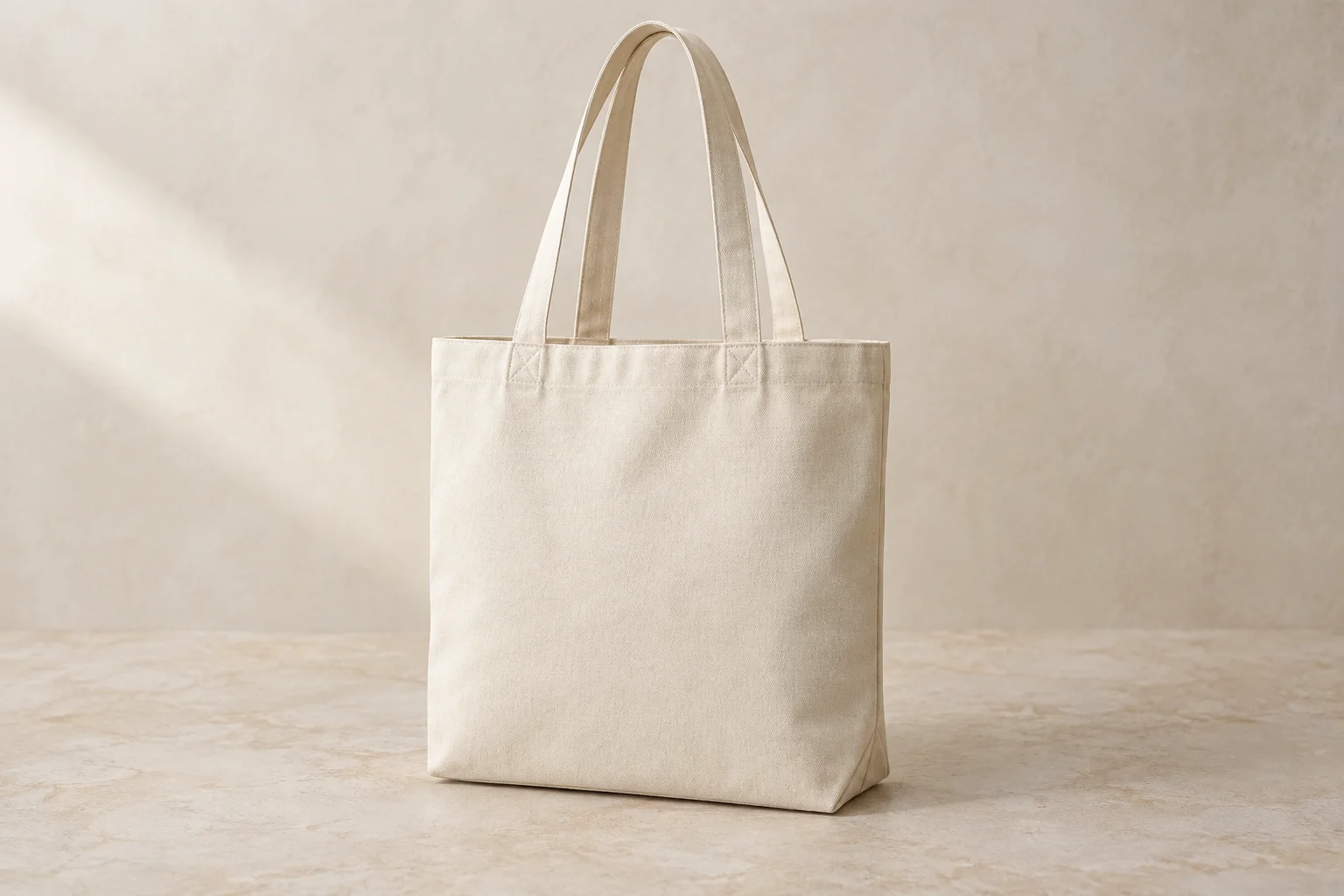
Six-location construction and photo record
These illustrative location references describe a buyer's drawing. Retain only the features in your design and replace the references with those used on your current construction drawing.
| Reference | Location | Locating view | Detail view |
|---|---|---|---|
| S01 | Left side join | Outside side view | Inside edge finish |
| S02 | Bottom join | Base and side junction | Inside base join |
| S03 | Top edge | Outside top edge | Inside top edge and lining junction |
| H01 | Front handle left attachment | Handle end on front face | Reverse of the attachment where visible |
| P01 | Pocket attachment | Pocket position on the complete bag | Pocket edge and corner detail |
| L01 | Lining join | Overall bag with sample identity | Inside lining join |
Worked S01 response: preserve three separate descriptions
- Buyer request
- A covered inside edge at the left side join, identified as S01 on drawing CANVAS-A revision A.
- Returned proposal
- Binding at S01, described in response CON-01. Keep this proposed description beside the request.
- Sample observation
- Photo IN-01 shows a strip covering the inside edge of sample SAMPLE-A; OUT-01 locates the same join from outside.
- Acceptance record
- Enter the agreed construction and dated response reference after the sample and construction notes have been reviewed together.
The example names a visible finish. It supplies no stitch specification, load rating or hidden allowance measurement.
Download the seam construction record (CSV) ↓
The UTF-8 file contains six location rows, JINYU's legal identity and separate blank fields for project references, requested construction, returned descriptions, sample observations and acceptance references. Edit a working copy and retain the original request.
What seam information belongs in a custom bag inquiry?
Identify where the panels join before describing how you want the finished bag to look. A useful construction brief distinguishes the side joins, bottom join, top edge, handle attachments and any lining joins. Give each location a reference on the drawing. Ask the response to describe the proposed construction at those locations, including how the raw edges are finished. A photograph of the outside face rarely shows all of these details.
Use a bag-line reference and drawing revision on every attachment. For example, an illustrative CANVAS-A drawing can identify S01 as the left side join and S02 as the bottom join. Those are buyer location labels, not catalogue models or stitch specifications. The downloadable record keeps those locations beside the requested description, returned construction note and sample photograph. It lets both parties discuss the same area without treating a reference photograph as a complete manufacturing instruction.
How should I label the outside and inside photographs?
Start with one overall outside view and one overall inside view of the same identified sample. Mark the front face, back face, left side and right side as viewed from outside. Add close photographs of the joins named on the drawing. For a lined bag, request an inside view that shows the lining construction as well as the exterior shell; a lining can obscure the shell joins in a finished sample.
Keep the original image files and assign a simple photo reference to each. In the worked record, OUT-01 locates the outside side join and IN-01 shows its inside finish. Link both to S01 and to the sample identity. Photograph the location before taking a closer view so a reader can place the detail on the complete bag. A caption should identify what is visible, such as an exposed edge or a binding strip, rather than infer hidden layers from the picture.
Which construction details should the response describe?
Ask for a description of the proposed join and edge finish at each reference. Keep the fabric description and material schedule revision alongside the construction drawing. Record thread information, stitch description and any stated stitch spacing in their own fields when supplied. If an allowance dimension is specified, give its endpoints and units on the drawing so it can be understood separately from the finished body measurement.
The blank CSV includes requested construction, proposed construction and observed sample finish as different columns. That distinction matters when a response proposes a bound edge where the buyer's reference image shows another finish. Preserve both descriptions and identify the proposed change. A close photograph can support the discussion, but an image alone does not establish the thread specification, hidden seam allowance or performance of the finished bag.
How do I record handle and pocket attachment details?
Give handle ends and pocket corners their own references instead of grouping every join under a single side-seam note. Mark the handle attachment location on the outside drawing and show its reverse side where visible. Describe the attachment appearance you are requesting and ask for the proposed construction. If a pocket crosses a body join, show that relationship on the drawing and request photographs that locate both features.
A handle attachment photograph does not establish a carrying-load rating. Keep any requested performance evidence in a separate, identified document request. For this construction record, compare the locations, visible reinforcement pattern and returned description against the agreed drawing revision. Use the pocket-placement guide for dimensions and the material schedule for component identity, then connect those references to the same sample. This avoids copying an attachment detail from a different design without identifying the change.
How can I compare two sample revisions without losing the original request?
Retain a separate sample identity for each physical revision, even when the colour and body size are unchanged. Copy the current location references into the next review sheet, then add the new drawing revision and photograph references. Record the requested change and the observed difference in separate fields. Keep the earlier photographs available so the next reviewer can compare the same location on both samples.
For an illustrative review, S01 can have a buyer request for a covered inside edge, a returned proposal for binding, and a photograph reference for the sample's observed finish. These entries describe stages of a discussion; they do not establish an accepted construction. Record the accepted description and its dated response reference once agreement is reached. Where a detail changes, ask whether the material schedule, drawing or other attachment also needs a new revision.
Does the same construction sheet apply to stock non-woven bags?
Use the sheet according to the purchasing route. For small-quantity non-woven bags, begin with the JINYU stock range and identify the actual product and size variant. Ask for photographs of that offered construction when a join or edge detail affects your selection. Record the stock reference beside the returned photographs so a general category image is not mistaken for evidence of a particular variant.
For custom canvas totes, backpacks and travel bags, attach the construction sheet to the project brief with dimensions, materials, components and artwork references. A stock bag photograph can communicate an appearance preference, but a request for different joins or attachments belongs in the custom construction discussion. Keep the requested design and the offered construction identifiable through the response. The sheet records the discussion without implying that every stock style can be altered.
What should I send with the completed seam record?
Send the current drawing, material schedule, numbered photo references and the editable construction record together. Include the bag-line identity, requested quantity and destination in the main inquiry. List which locations need a written construction response and which need a sample photograph. An attachment index helps the recipient identify a missing inside view or an outdated drawing by its filename.
Keep the original requested sheet and save returned descriptions in a separate copy. Review visible sample details alongside the supplied construction notes, then retain the accepted revision with the purchasing documents. JINYU is the brand of Shaanxi Jinyu Kitchenware Co., Ltd. (陕西金宇厨具有限公司). Use the inquiry form to submit the project and its specific construction questions. The downloadable CSV provides a starting record with blank project fields; its location labels can be replaced to match your own drawing.
Reference sources
- Prepare the complete custom bag inquiry
- Prepare the component material schedule
- Locate pockets on the construction drawing
- Index the inquiry attachments
- Custom canvas tote bags
- Send the construction brief
Regional references support general planning; model-specific specifications come from the published JINYU model tables.