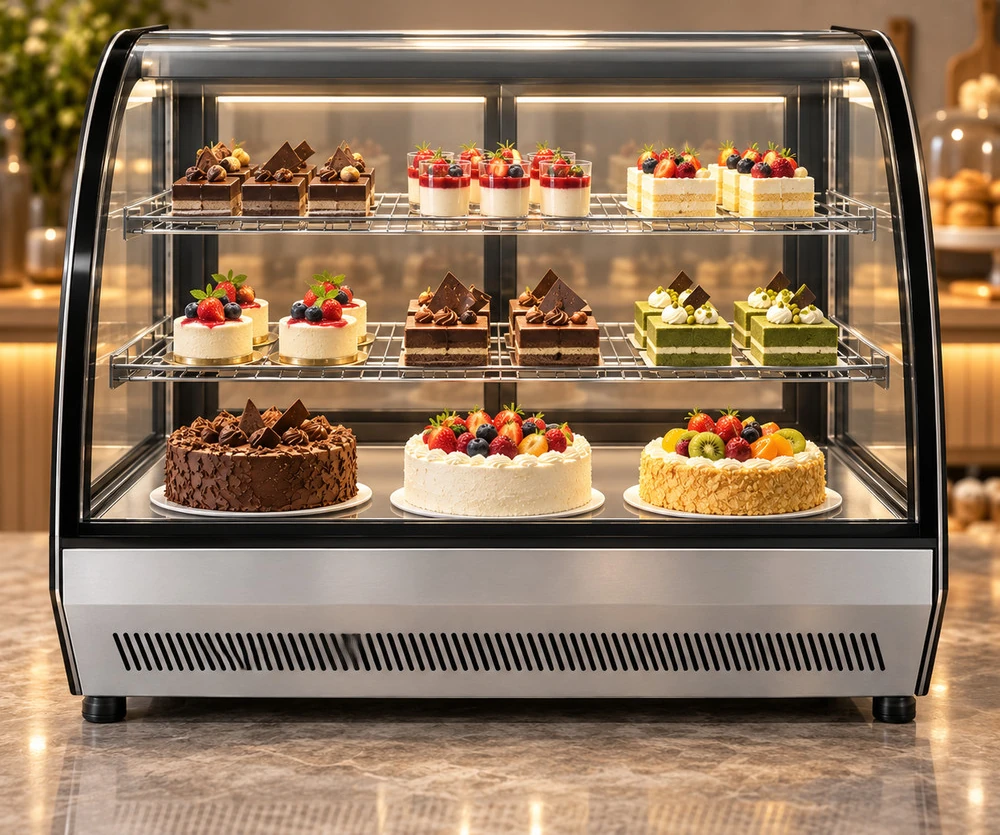
Which display fridge size measurements determine whether my trays fit?
Use three measurement records: the cabinet exterior, the usable shelf and the clear loading opening. Exterior width, depth and height locate the equipment on the site plan. Shelf measurements locate the products inside it. Opening measurements describe the passage used to load and remove them. Keep the full model code on all three records so a drawing for one cabinet cannot be mistaken for another.
Start with the tray you actually use. Measure its widest outside edges, including handles, and the height of the finished product above it. A cake board, its decoration and a transport cover can have different outlines. Record the complete item that will enter the display. The table below gives verified cabinet dimensions; the inquiry sheet identifies the internal measurements to request for that shortlist.
What do the two 900 mm countertop cabinets show about size and capacity?
GN-900CT and GN-900RT both measure 900 × 530 × 730 mm. The CT records 120 L capacity, two chrome-plated shelves and curved front glass. The RT records 140 L, two shelves and straight glass sides. Both have two sliding doors at the rear. Equal exterior dimensions therefore accompany different capacity and glass descriptions.
Draw either cabinet on the same 900 × 530 mm body rectangle when comparing counter positions. Keep their interior records separate. The extra 20 L listed for RT does not specify an additional tray, a wider door opening or greater shelf depth. Ask for a shelf plan and loading-opening measurements for each candidate, using the same tray schedule in both requests.
How do I calculate the width of a proposed tray row?
For a straight row of identical rectangular trays, multiply tray width by the number across and add the spaces between them. Three illustrative 260 mm-wide trays with two buyer-selected 15 mm gaps require 810 mm: 3 × 260 + 2 × 15. Rotate those example trays so their 180 mm edge faces forward and the row becomes 570 mm: 3 × 180 + 2 × 15. The required depth then changes from 180 to 260 mm.
These are layout calculations using example trays, not shelf dimensions for a JINYU model. Compare the result with the returned usable shelf drawing, including its shape and loading instructions. Record front, rear and side allowances separately; the chosen 15 mm gaps describe only the spaces between trays in this example.
Why should I measure the loading opening separately from the shelf?
A shelf layout describes the resting position. Loading also involves passing the tray through an opening and moving it to that position. Ask for the clear opening with the sliding door in its loading position, identifying the width and height measurement endpoints. Mark any frame or shelf support that intersects the intended movement on the returned drawing.
For an illustrative 420 × 300 mm tray, a straight, level approach with the 420 mm edge leading presents that width at the opening. Turning the tray changes the movement to be reviewed. A photograph of the finished shelf arrangement does not show every part of that transfer. Request a measured sequence using the actual tray dimensions, with the model and shelf position visible in the record.
How do shelf count and cabinet height affect my shortlist?
GN-1200RF2 is a freestanding 1200 × 730 × 1200 mm cabinet with two glass shelves and 425 L recorded capacity. GN-1000RK3 is freestanding at 1000 × 740 × 1300 mm, with three glass shelves and 525 L. Both record two sliding doors on the service side. Compared with RF2, RK3 is 200 mm narrower, 10 mm deeper and 100 mm taller.
Those exterior differences and shelf counts belong on the shortlist, but neither record supplies clear height above each shelf. Number the intended shelf positions and list the tallest finished product for each. Show the lower display area as a separate position when requesting measurements. Keep shelf-load information attached to the corresponding drawing rather than estimating it from cabinet litres.
What should a measured shelf photograph include?
Identify the model, configuration, shelf position and date on the measurement record. Request a top view for width and depth, a side view for clear product height, and a service-side view for the loading opening. Ask for the measurement endpoints to be visible. Keep the original image together with any marked-up copy so the purchasing team can follow the dimension being discussed.
Use one reference number for each requested measurement. For example, S2-D can identify usable depth on the second shelf, while O1-W identifies clear loading-opening width. These are buyer worksheet labels. If a curved edge or support limits a specific tray position, mark that location instead of recording only the largest dimension visible elsewhere on the shelf.
How should I record a tray or cabinet substitution?
Retain the original tray dimensions and the proposed replacement on separate rows. A replacement tray with the same nominal size can have different handles or a projecting rim; measure its complete outside outline. Recalculate each planned row using those measurements, then review depth, finished-product height and the loading movement against the same model drawing.
When the cabinet changes, keep the old model reference and create a new measurement column. Switching from GN-900CT to GN-900RT preserves the exterior outline but changes the recorded capacity and glass description. Switching to GN-1000RK3 changes installation format, dimensions and shelf count. Record the revised drawing reference and the tray positions reviewed before replacing the shortlist entry.
What should I send JINYU for a tray-fit review?
Send the full model shortlist, measured tray schedule and intended product allocation by shelf. Include the cabinet position drawing, the staff loading side and the work surface from which trays will be transferred. Attach the eight-field sheet below with the specific shelf and opening measurements requested. Include finished product heights and any tray handles or covers used during the loading movement.
Ask Shaanxi Jinyu Kitchenware Co., Ltd. (陕西金宇厨具有限公司) for model-specific shelf drawings, clear loading-opening dimensions and shelf-load information. Keep the response beside the same tray schedule revision. Use the inquiry page to identify any proposed alternative cabinet or tray so the response addresses the actual combination being considered.