Buyer planning guide
Commercial Kitchen Pickup or Delivery: An Access Worksheet
A commercial kitchen pickup and delivery worksheet: compare real cabinet dimensions, work through a doorway calculation and assign unloading, indoor movement and receiving tasks.
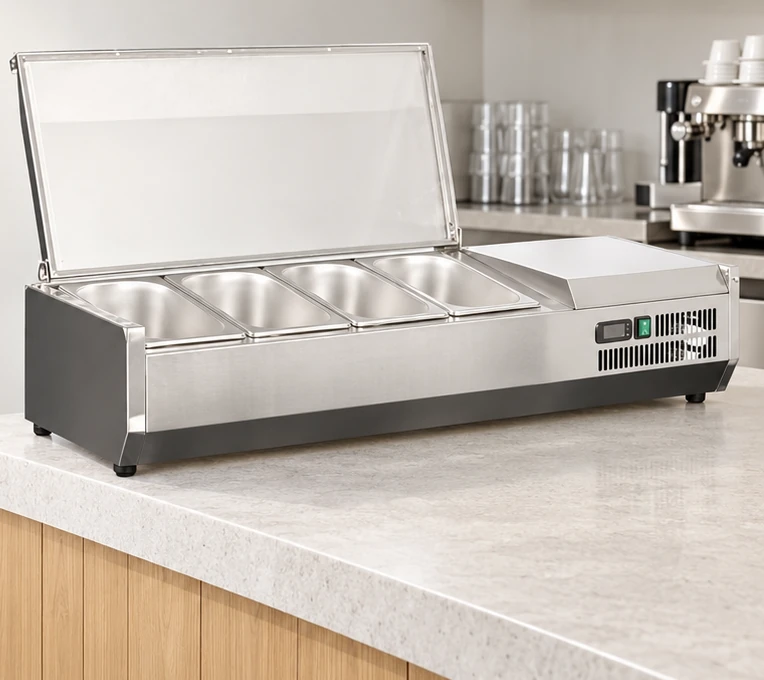
Cabinet data for the access worksheet
Recorded unpacked cabinet dimensions; request packed dimensions and handling instructions for the selected shipment separately.
| Model | Width (mm) | Depth (mm) | Height (mm) |
|---|---|---|---|
| GN-900L | 900 | 740 | 1400 |
| GN-1200L | 1200 | 740 | 1400 |
| GN-660RT | 660 | 530 | 730 |
| GN-900RT | 900 | 530 | 730 |
Pickup and delivery movement worksheet
| Stage | Site or cargo record | Response to request |
|---|---|---|
| Collection loading | Package count, packed dimensions, gross weight and origin loading point | Who loads; proposed method; collection handover location |
| Arrival unloading | Vehicle stopping point, surface and receiving access | Who unloads; equipment provided; unloading endpoint |
| Indoor movement | Numbered doors, turns, lift and level changes | Who moves each package; route reviewed; indoor endpoint |
| Final placement | Operating position, counter height and support information | Who positions the cabinet; scope of unpacking and packaging removal |
| Receiving record | Packing-list references, identification and condition photographs | Who records handover; agreed discrepancy-reporting procedure |
How do I use an access worksheet to compare pickup or delivery options?
Start with the equipment list, then follow the shipment from collection to its operating position. Give each physical movement its own row: collection loading, line-haul transport, arrival unloading, movement through the building and final positioning. Record the proposed handover location, responsible party and supporting document against each row. Two transport proposals can then be compared against the same route instead of two different interpretations of delivery.
Use this worksheet after reading the pickup-and-delivery overview. That guide explains the alternatives; this page turns the access survey into a comparison record. Keep one revision of the equipment list attached to both proposals. If the selected model changes, review its package and the affected route stages before carrying the earlier transport plan forward.
Which cabinet measurements belong in the first part of the worksheet?
Write the model code and the recorded cabinet width, depth and height in separate cells. The comparison table above draws those dimensions directly from the JINYU model catalogue. Keep a second set of cells for packed dimensions, gross weight and package count from the shipment-specific packing record. Label the two sets explicitly so the team preparing vehicle access does not mistake the product outline for the cargo envelope.
For example, GN-660RT has a recorded cabinet outline of 660 × 530 × 730 mm. GN-900L is 900 × 740 × 1400 mm. These are different cabinet formats, not interchangeable delivery packages. Neither set establishes pallet size, crate height, lifting points or the equipment needed to unload. Request those details for the actual configuration and attach the response to the worksheet.
How can I record a doorway calculation without claiming that a cabinet will fit?
Use measured clear openings and show the arithmetic beside the route photograph. In a hypothetical survey, an entrance has an 800 mm clear width. Comparing it with the GN-900L cabinet depth of 740 mm leaves 60 mm in total, or 30 mm on each side if centred. This calculation concerns the bare cabinet outline in one orientation. It does not establish package passage or handling clearance.
A GN-660RT depth of 530 mm leaves 270 mm against that same hypothetical opening. Record this as another outline comparison, rather than a delivery approval. Door hardware, thresholds, handling equipment and turns can change the movement. Ask the party moving the equipment to review the full route against the packed cargo dimensions and handling instructions. Record their proposed method beside the calculation.
What should each route checkpoint record?
Number checkpoints from the unloading position to the final equipment location. For each door, record clear width and height with the door in its usable position; photograph projecting hardware and the threshold. For corridors and turns, draw the approach and departure directions and measure the available space on both sides of the corner. A narrowest-opening list alone cannot describe a change of direction.
If the route uses a goods lift, record its clear door opening and interior dimensions, and attach the building's lift information for the handling team. Identify changes in level, steps and temporary obstructions on the same plan. Keep measurements, photographs and building documents under the checkpoint number. This lets the carrier or mover ask about a specific location instead of responding to an unlabelled collection of photos.
How do I separate unloading from movement inside the restaurant?
Create distinct rows even when one service proposes to perform both tasks. The unloading row identifies where the vehicle stops, the surface at that point and who provides the unloading method. The indoor-movement row begins at a named handover position and ends at another named position. Ask each proposer to describe its responsibility against those locations and the numbered route checkpoints.
For a countertop model, add a final-placement row describing the intended counter and the height of its top above the floor. Reaching the kitchen does not describe the lift onto that surface. Keep the cabinet's support review and the movement plan together, with the responsible parties identified. Connection and commissioning belong in their own scope records so the receiving team can see what happens after positioning.
Which differences between collection and delivery proposals should I highlight?
Mark differences in the physical endpoint first. One proposal might end at a receiving entrance while another describes placement inside a ground-floor room. Copy each stated endpoint into the same worksheet row and link it to the relevant route checkpoint. Then compare who arranges collection loading, arrival unloading, unpacking, packaging removal and final movement. Record exclusions alongside the task they affect.
Use the same cargo revision for both alternatives. If one proposal uses cabinet dimensions and another uses packed dimensions, request comparable cargo records before assessing the proposed handling. For nominated-carrier collection, give your carrier the origin loading details as well as the destination survey. For arranged delivery, ask the proposer to state which surveyed stages its service covers. Leave commercial terms in the separate quotation record.
What should be checked at the receiving handover?
Prepare package-reference rows from the packing list before arrival. At handover, compare the package identifiers and count with that record, photograph the visible packaging condition and document differences using the agreed receiving procedure. Keep the handover location and the person recording the observations with those photographs. An observation at the vehicle and one after indoor movement describe different moments in the route.
After unpacking, record model identification and the supplied accessory list against the agreed equipment revision. Keep findings about packaging, product condition and later installation as separate entries, each with its observation stage. If a discrepancy needs reporting, assemble the package reference, model, photographs and relevant document together. The worksheet supports that record; it does not replace the shipment's agreed handover and reporting arrangements.
What completed worksheet should I send with a JINYU inquiry?
Send the selected models, destination and a numbered route plan, plus the checkpoint measurements and labelled photographs. Attach building receiving instructions and state the handover endpoint you want each proposal to address. Include both the requested collection alternative and delivery alternative where you want them compared. Identify who will coordinate receiving and who will review the final placement plan.
Keep the returned information beside the cabinet data rather than overwriting it. When a model, package or receiving route changes, update the worksheet revision and identify which responses need review. The result is a traceable transport brief tied to actual equipment and a measured site.
Reference sources
- Survey a goods-lift route for an upper-floor delivery
- Equipment receiving checklist: identity, condition and discrepancies
- Compare pickup and delivery service scope
- Survey the full delivery route
- Read packed and unpacked dimensions
- Prepare a receiving discrepancy report
- Review JINYU equipment models
- Send the access worksheet with an inquiry
Regional references support general planning; model-specific specifications come from the published JINYU model tables.