Buyer planning guide
Pickup or Delivery Options for Commercial Kitchen Supplies: What Should Buyers Ask?
Compare carrier collection and delivery proposals for commercial kitchen supplies: handover points, unloading, indoor movement, packed dimensions and receiving documents.
Map equipment to packages and reconcile split pickup or delivery movements →
Central receiving or direct-to-site equipment delivery?: a six-unit, three-site allocation with model records and onward handovers.
Reconcile delivered package identifiers and split arrivals with a receiving example and editable discrepancy record.
What pickup or delivery options should I ask about for commercial kitchen supplies?
Ask for two written alternatives against the same equipment list: collection by your nominated carrier, and a delivery proposal with a named destination and handover point. State the model codes, quantities, destination country and postcode, and whether the receiving address is a warehouse, restaurant or shop inside a larger building. Ask which alternatives can be offered for that shipment.
The word delivery does not describe the final movement into a kitchen. Separate transport to a terminal, transport to the site, unloading, movement indoors and placement at the operating position. Use those steps as comparison headings. This guide is an inquiry framework; availability and the actual scope belong in the shipment-specific proposal.
How do I compare carrier collection with supplier-arranged delivery?
For carrier collection, ask for the collection address, the packed cargo list, loading arrangements and the documents that your carrier needs before accepting the job. Identify who will book the vehicle and who will coordinate the handover. Ask the carrier to review those details alongside its own transport proposal.
For supplier-arranged delivery, request the named destination, included transport stages and the point where the shipment is handed over. Ask for a separate description of unloading and any onward movement. Compare both alternatives using the same packed dimensions and weights. A proposal ending at a freight terminal and one ending at your receiving entrance leave different tasks for your team to arrange.
Does delivery include unloading, carrying equipment inside or installation?
List those as separate questions. Ask who unloads the vehicle, what equipment the receiving site must provide, who moves the cabinet through the building and where the delivery crew's work ends. Include stairs, a goods lift, restricted entrances and any distance between the vehicle stop and the kitchen. Request a response for each step.
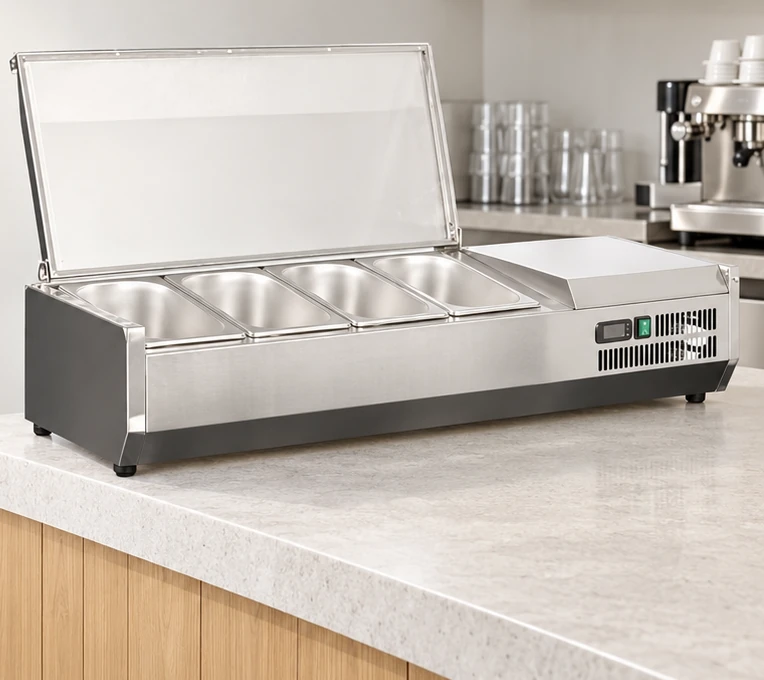
Treat unpacking, positioning, connection and commissioning as separate scope items too. A countertop display can require a final lift onto a prepared counter even after it reaches the room. Give the installer the model documents and proposed position drawing. Keep the delivery scope beside the installer's scope so a movement or connection task is not left without an assigned party.
Which measurements are needed before either option can be compared?
Request packed length, width, height, gross weight, package count and handling instructions for the exact offered configuration. Keep those entries separate from the unpacked cabinet dimensions and net weight. Ask whether accessories form separate packages and how the model code appears on each package reference. Forward the same cargo record to everyone preparing a transport proposal.
For the building route, measure door openings, turns, lift access and the intended equipment position. Record the vehicle access and unloading area in photographs. Use the delivery-route guide for the detailed survey. Avoid deciding that a packed unit will pass through an entrance from the cabinet width alone; compare the actual package with the full route and handling method.
How should I describe a restaurant or cafe receiving appointment?
Send the receiving address and the entrance the vehicle should use, with a photograph or marked plan where the correct access is unclear. Identify the person responsible for receiving and the site's permitted receiving periods. Describe booking requirements, parking restrictions, shared loading areas and any building rules affecting movement through public areas.
Ask how the proposed transport service handles appointment booking and arrival communication. Keep requested receiving periods distinct from a confirmed booking. If a nominated carrier collects the shipment, give that carrier the same site brief. Before accepting either option, record which party will check access arrangements with the building and communicate the final receiving plan to the people unloading and moving the equipment.
What documents and responsibilities should the transport proposal identify?
Ask for the packing list and the shipment documents relevant to the proposed route, with the seller, buyer and carrier roles identified. For an international shipment, ask the forwarder or customs representative which documents and clearance arrangements they require for the destination. Compare the named handover point and stated responsibilities across the equipment and transport proposals.
If a proposal uses a trade term, ask for the exact term, named place and version used in the agreement. Request a written account of who handles export arrangements, destination clearance, unloading and onward transport. Keep insurance scope and any inspection or notification procedure with the shipment record. Do not infer these responsibilities from a short phrase such as door delivery.
What should the receiving team record when the shipment arrives?
Prepare a receiving sheet from the packing list, with a line for each package reference and model. At handover, compare the identifiers and package count, photograph the packaging condition and record any visible difference. Follow the agreed carrier and seller procedures for noting damage or missing packages, and keep copies of the handover record.
Plan unpacking and equipment inspection with the responsible team. Compare supplied accessories with the agreed list and retain photographs of identification labels and any discrepancy. Keep the delivery observation separate from later installation findings so the record shows when each issue was seen. Use the receiving-discrepancy guide to assemble the model reference, photographs and document references into one report.
What should I send JINYU to request comparable pickup and delivery proposals?
Send one brief containing your model shortlist, equipment quantities, destination, preferred receiving entrance and route survey. State whether you want to compare nominated-carrier collection and supplier-arranged transport. List the desired handover point and identify the unloading, indoor movement and installation tasks that you want addressed separately. Attach any building receiving instructions.
Ask JINYU for the offered packed cargo details and a written response to each scope item. Keep the reply, transport proposal and installer response under the same equipment-list revision. That gives the purchasing team a practical comparison: who moves each package, where each handover occurs and which arrangements still need to be made.
Reference sources
- Plan unpacking and receiving space
- Change a pickup or delivery destination
- Record a buyer-arranged collection handover
- Prepare a stair-route survey for an upstairs equipment position
- Reconcile a split equipment order across two movements
- Compare pickup and delivery quotation scope
- Prepare the delivery appointment brief
- Equipment receiving checklist: identity, condition and discrepancies
- Complete the pickup and delivery access worksheet
- Compare commercial equipment and model specifications
- Survey the equipment delivery route
- Separate packed and unpacked dimensions
- Prepare package references and shipping marks
- Record receiving discrepancies
- Send a model and receiving brief
- Plan pickup or delivery when the kitchen site is not ready
Regional references support general planning; model-specific specifications come from the published JINYU model tables.