Buyer planning guide
Custom Bag Inquiry: Stock Non-Woven or Custom Canvas?
Compare stock non-woven and custom canvas bag inquiry routes using three real JINYU stock sizes, a shared buyer brief and a side-by-side response worksheet.
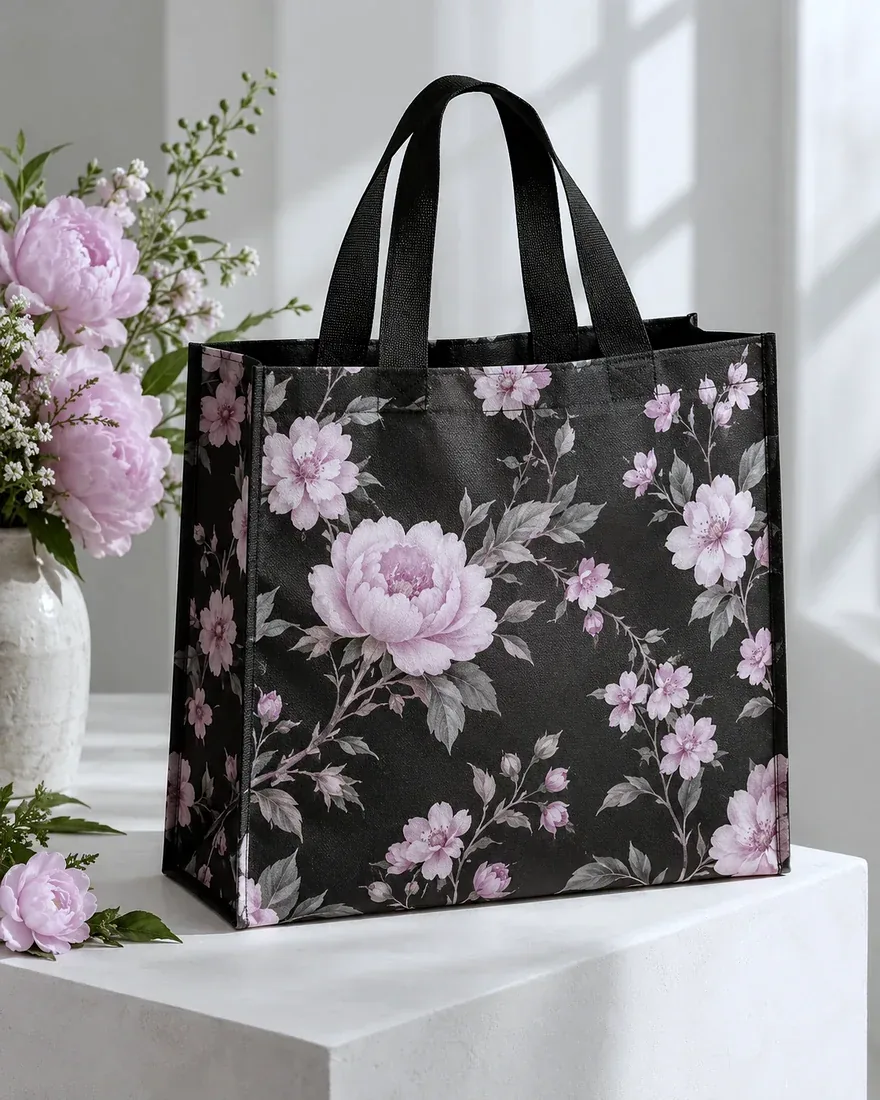
Three stock references for the shared buyer brief
Catalogue body dimensions use width × height × depth. Availability and offered configuration are requested against the complete reference.
| Style | Variant | Body dimensions | Construction |
|---|---|---|---|
| Gusseted Non-Woven Shopper | RETAIL35 | 35 × 40 × 10 cm | Open top, side and base gussets, separate loop handles |
| Gusseted Non-Woven Shopper | STD | 40 × 35 × 15 cm | Open top, side and base gussets, separate loop handles |
| Non-Woven Takeaway Bag | M | 23 × 25 × 14 cm | Open top, separate loop handles and a gusseted base |
Stock versus custom response worksheet
Copy the seven records below into the inquiry. Add columns for your request, the actual response, document reference and the difference to resolve.
| Record | Stock non-woven response | Custom canvas response |
|---|---|---|
| Bag identity | Full catalogue style and variant; offered colour | Proposed canvas body drawing and revision |
| Dimensions | Catalogue body fields plus requested opening measurements | Requested dimensions beside the returned dimensioned drawing |
| Material | Offered non-woven construction against the stock reference | Proposed canvas description against the requested construction |
| Handles and closure | Offered arrangement and separately measured handle details | Handle attachment, dimensions and closure on the drawing |
| Decoration | Proposed artwork and placement on the offered stock bag | Artwork and placement linked to the canvas body revision |
| Quantity lines | Response for each requested size, colour and artwork version | Response for each requested body, colour and artwork version |
| Evidence | Identified stock photographs or sample with represented features | Identified construction sample, artwork proof and represented features |
Should my bag inquiry ask for stock non-woven bags or custom canvas totes?
Start with the features your project needs: body dimensions, material, handle arrangement, closure, artwork and quantity by version. For a small non-woven request, ask about available stock in a named catalogue style and size. Canvas totes follow the custom route, with a proposed construction and drawing for the requested bag. Include both routes in the inquiry when the material or construction choice is still open.
Keep the same intended contents and carrying arrangement in both briefs. This gives the respondent a common task to address while leaving room to describe different constructions. A stock reference supplies catalogue dimensions; a custom request describes a bag to be reviewed. Record what each response actually offers before choosing between them. The worksheet below keeps requested features, stock responses and custom responses side by side.
Which real non-woven stock sizes can I use as inquiry references?
JINYU gusseted shopper RETAIL35 is listed at 35 × 40 × 10 cm, while STD is 40 × 35 × 15 cm. These measurements use width × body height × depth. RETAIL35 is 5 cm narrower, 5 cm taller and 5 cm shallower than STD. The takeaway shopper M reference is 23 × 25 × 14 cm. Use the complete style name and variant code when requesting availability; the letters M or STD alone do not identify a bag across the catalogue.
These are outside body references. The gusseted shoppers have an open top, side and base gussets and separate loop handles. The takeaway shopper has an open top, separate loop handles and a gusseted base. Ask for usable opening and handle measurements where those affect the project. Retain any offered alternative beside the requested reference so a size substitution is visible.
How can I compare both routes against one practical buyer brief?
In an illustrative request, the buyer wants a bag for a wrapped presentation box measuring 30 × 20 × 8 cm. The intended orientation places 30 cm across the bag width, 20 cm vertically and 8 cm front to back. Against the RETAIL35 catalogue body, subtraction leaves 5 cm across width, 20 cm in body height and 2 cm in depth. Those differences compare external outlines; seams, folds and the opening still need a physical sample review.
The takeaway M reference is only 23 cm wide, so its width field is 7 cm smaller than the proposed 30 cm box orientation. Put that difference in the response sheet rather than treating every gusseted bag as interchangeable. The same buyer could request a custom canvas drawing addressing the box, handle arrangement and closure. The box dimensions are an example purchasing brief, not a JINYU product specification or a fit guarantee.
What belongs in the custom canvas column that a stock code cannot describe?
Specify the requested canvas body dimensions with named measurement endpoints, fabric description, handles, seams, base arrangement and closure. Give the respondent the contents dimensions and intended orientation as separate fields. Ask for the proposed drawing to identify its dimensions and construction. A request referring to the shape of RETAIL35 can communicate proportions, but that non-woven code does not identify an existing canvas design.
Keep artwork dimensions and positions linked to the proposed canvas drawing. Identify the front, back and gussets separately, including any face intended to remain unprinted. Handle attachments and seams can affect the available artwork space. Request a response covering the proposed construction and decoration together, then retain the drawing and artwork revisions with the exact quantity line. A material change deserves its own response even when the outside dimensions stay the same.
How should quantities and artwork stay comparable between the two responses?
Use one requested version per row, with quantity, colour reference and artwork revision attached to that row. An illustrative project could request 60 natural-colour bags and 40 black bags, for a total of 100. These numbers describe an example buyer request; they do not state stock availability, an accepted order quantity or a production commitment. Ask each route to answer both lines separately.
If the stock response offers a different colour or size, preserve the requested line and record the offered alternative in its own column. If the canvas response changes the body or handle drawing, attach that revision to the affected versions. A shared artwork file does not establish that the same print dimensions or placement are suitable for both materials. Ask for the proposed decoration on each offered bag and compare the returned proofs against the corresponding body record.
Which evidence should I compare before selecting stock or custom?
For stock non-woven, connect the response to the exact style, variant, offered colour and available configuration. Request photographs or a sample identified with that reference, plus the dimensions needed for the contents and carrying review. For custom canvas, connect the response to the proposed construction drawing, material description, handle details and artwork proof. Ask which features a sample actually represents, especially when a sample uses a different colour or decoration.
Compare observations feature by feature. An unprinted construction sample can show the body and handles without representing the final artwork. A digital proof can show intended decoration without establishing how the finished bag carries the contents. Keep those records in separate evidence fields. Record the sample identifier, document revision and date of each response so the purchasing team can trace the selected combination back to the material and dimensions reviewed.
What should I send JINYU when both routes remain under consideration?
Send the common contents brief, intended bag dimensions, carrying arrangement and requested version quantities to Shaanxi Jinyu Kitchenware Co., Ltd. (陕西金宇厨具有限公司). Identify the stock non-woven references being considered and attach the custom canvas construction request separately. Include named artwork files, colour references and the destination for the quotation discussion. State which features are essential and which alternatives you want compared.
Use the inquiry form to describe the two routes and reference the same project identifier on the supporting files. Ask for a line-by-line response to the worksheet, including the offered bag reference, construction documents and sample evidence. When one route is selected, retain its accepted revisions with the purchasing record. Keep the unselected response identifiable as an alternative so an earlier stock code or canvas drawing does not accidentally become the instruction for the chosen bag.
Reference sources
- Gusseted non-woven stock sizes
- Takeaway non-woven stock sizes
- Custom canvas tote bags
- Compare a quotation with the requested bag dimensions
- Identify the features represented by a sample
- Send a bag inquiry
Regional references support general planning; model-specific specifications come from the published JINYU model tables.