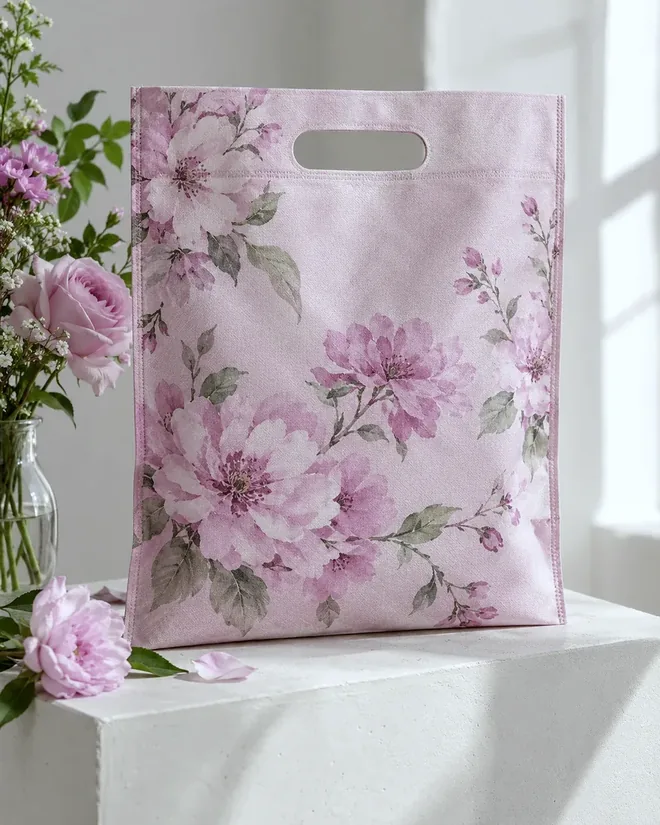
D-Cut Carrier Bag
30 × 40 cm · flatExternal size reference
For slim handouts. Check usable height below the handle opening, not just the outside bag height.
 JINYUCommercial equipment & packaging.
Promotional use
Promotional distributors: send packed W×H×D, bag format, GSM, logo, quantity per artwork and destination for a sample and quotation review.
Send the quantity for each size, colour and artwork. For a small non-woven bag order, ask about available stock; identify the stock item before choosing samples or arranging delivery.
Back to your selected size →Set a valid quantity on your selected bag before preparing email or WhatsApp.
Choose for the contents
Start with the contents. These outside dimensions and material references are not confirmed stock or manufacturing minimums.
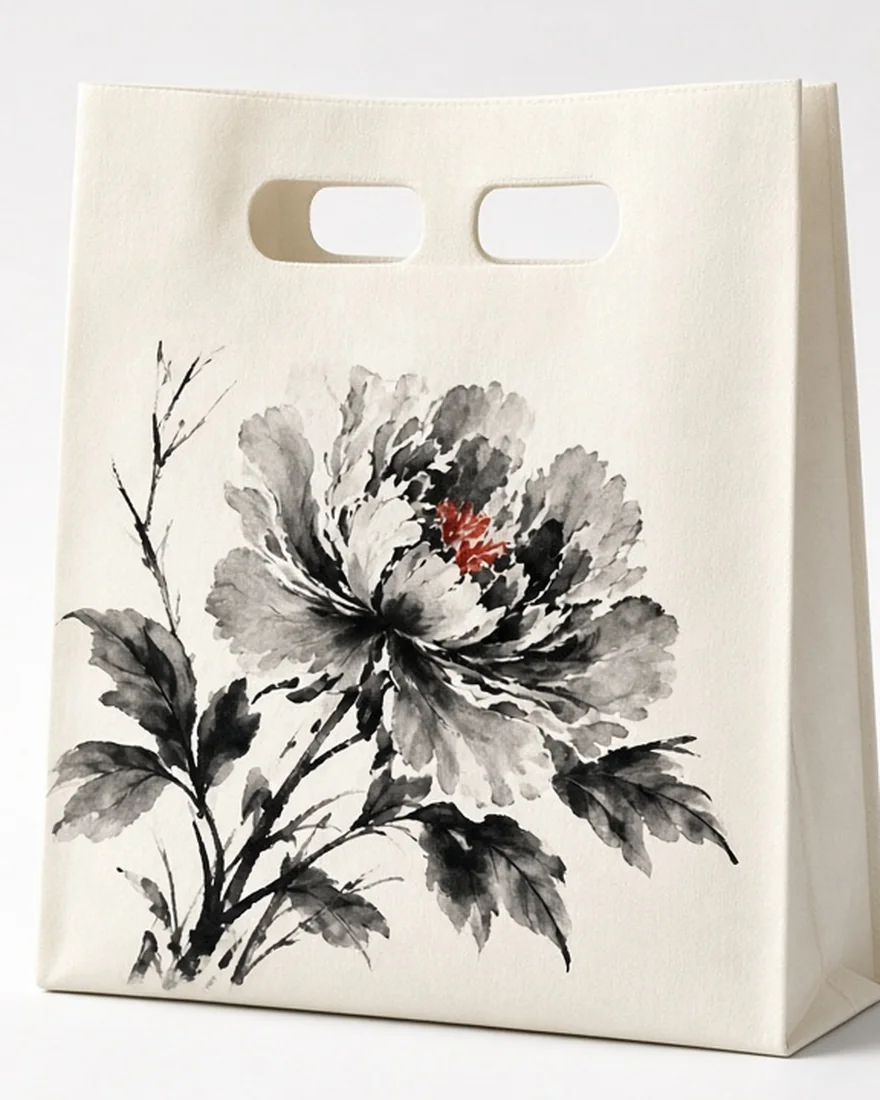
Help me choose →30 × 40 cm · flatExternal size reference
For slim handouts. Check usable height below the handle opening, not just the outside bag height.
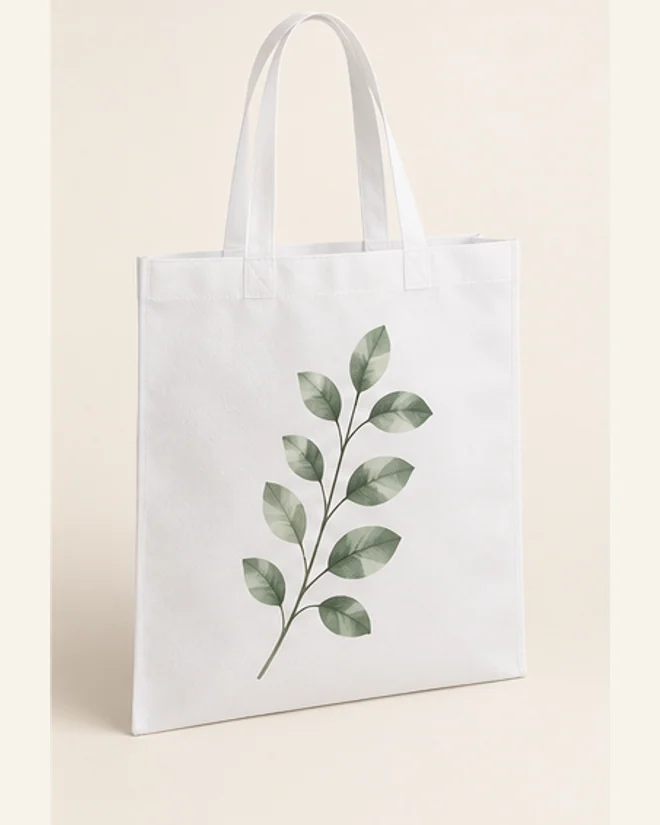
38 × 42 cm · flatExternal size reference · 80 GSM
Start flat for slim packs. If depth matters, compare the 10 cm gusset in the size guide and confirm filled fit by sample.
Prepare a useful brief
Send editable artwork where possible. For a vector logo, share an AI file or a PDF that retains vector artwork; a PSD may preserve editable layers but is not automatically a vector logo. Confirm fonts, colours, desired print width and height, position and number of sides. The production template and usable print area are confirmed for the chosen bag and process.
Review the logo production route →For local printing, ask your printer to approve a material sample first. For finished printed bags, confirm the artwork and sample route with us. Share the required arrival date before a delivery plan is agreed.
Compare the plain-bag route →List the quantity for each size, fabric colour and artwork, stating pieces or weight. A brief of 500 kg/month is not a bag count: size, GSM and construction affect the count. Clarify net or packed weight and order frequency; retain that wording until piece quantities are confirmed. Compare bag, print, setup, sample, packing, freight and taxes using the same delivery term and destination.
Check quantities per design →Samples & useful answers
Check usable space and handles with the intended contents. An artwork proof checks layout; a printed sample checks the selected material and print together.
Sample cost, production and transport are confirmed separately.
Discuss a sample →Logo-printed bags are used for promotional handouts at trade shows, conference delegate packs, retail purchases and gift packaging. Compare the D-cut and loop-handle starting points on this page against the size and weight of the contents. Confirm usable space, handles and print with a sample rather than assuming a load rating.
For agricultural promotion, confirm packed contents, finished W × H × D, colour, printed sides and artwork, handle (including nylon if required), GSM, quantity per artwork, destination and arrival date. A range such as 8 × 10 to 20 × 30 inches is planning input, not a JINYU size, stock promise or MOQ. Include the sample and delivery requirements with that specification.
Send an agricultural promotion brief →Start with the contents, finished dimensions, material, handles and artwork. State the quantity for each size, colour and design, the sample requirements and delivery destination. JINYU reviews these details together so the quotation identifies the bag construction, decoration, packing and delivery terms. Keep the sample record and artwork version with the quotation so changes can be checked against the same specification.
See how our sourcing route works →A custom non-woven bag is specified through its size, handles, fabric colour and/or printed artwork. Our two promotional references use PP (polypropylene) non-woven fabric: fibres bonded into a sheet rather than woven or knitted. Confirm the actual material, GSM, construction and print route for your order; the term does not establish stock or certification.
We can review a multi-size brief. Send the quantity for each size, material colour and artwork, the D-cut, W-cut or other handle construction, target GSM, logo sides and colours, destination port and requested delivery term. If payment by letter of credit is required, include it in the first brief. We then confirm the production route, sample, workable quantity, freight and payment terms for the selected specification. A 40-60 GSM range, a 20,000-piece total or a three-size mix is not a standard JINYU MOQ, stock or guaranteed capability; each route is confirmed against the actual brief.
Send a multi-size logo-bag brief →Yes, we can review that as a brief. A 10 × 15 inch D-cut bag with a patch handle is a planning example, not a fixed JINYU catalogue size or guaranteed construction. Send the filled contents, finished W × H × D, handle opening and patch details, material colour, GSM if known, logo sides, quantity per artwork, packing, destination and required arrival date. We check the usable opening, seams, handle comfort and print with the selected sample, then confirm the production route, workable quantity and delivery for the specification. A public buyer request using this wording does not establish a standard MOQ, stock or capability.
Check the D-cut brief inputs →A custom non-woven bag is a bag specified for a particular use through its finished size, handle construction, material colour and printed artwork. Confirm the fabric, GSM, dimensions, print route and quantities by size, colour and artwork; custom does not establish stock or certification.
Packing is agreed for each order, not a fixed pack or carton count. For a delivery quote, confirm bags per carton, carton dimensions and gross weight. Also agree flat or folded packing, grouping by artwork or colour, and any bundle, label or protection requirements. Packaging changes, freight and individual-recipient fulfilment must be confirmed separately.
Put the same dimensions, gusset, GSM, handle construction, material colour, print sides and colours, quantity per design and packing on both quotations. Compare the scope of artwork setup, samples, freight, tax and duty. State the delivery term and named destination port if requesting CIF, and ask what each quotation covers. If payment must be by letter of credit, say so in the first brief; acceptance and terms depend on the selected supplier. A smaller unprinted bag is a different specification from the printed bag you need.
Check the specification and quotation details →Making one printed batch and shipping it to a nominated warehouse is different from packing and mailing a parcel to each recipient. Share the bag specification, quantity per artwork, destination countries, number of delivery points, who will handle fulfilment and required arrival date. We can compare suitable bag manufacturers and a bulk delivery route; individual-recipient fulfilment needs separate provider confirmation. Check which services the quotation includes. Do not send recipient names or addresses in an initial enquiry.
Ask to compare one bag size, one available material colour and one shared artwork against the original version, keeping the actual order quantity visible. Reducing the number of print colours, sides or different designs may reduce setup complexity. Compare the revised specification in a current quotation and keep the bag large and robust enough for its intended contents; do not substitute a different specification without approval.
Compare your logo printing requirements →Send the quantity you need for each size, colour and artwork. The print process, material and bag construction are reviewed for that brief, and the quotation identifies the proposed quantity. For a small non-woven bag order, ask separately about available plain stock. Adding new artwork is a print request; include the logo dimensions, printed sides and sample requirements rather than assuming that a stock bag is ready for your print process.
Understand production batches and artwork quantities →Ask about available plain stock and the later print requirement together. We need to confirm that the chosen material, colour and format suit the intended print route.
Send clear photos, dimensions, approximate material weight if known and the required quantity. We can compare a reference-based option and an alternative construction.