What changes when equipment goes to a central receiving point?
A central receiving point creates another location between collection and the final kitchen. In the worked order below, six equipment units serve three sites. Direct movement sends the allocated equipment to each site. Central receiving sends all six units to a hub first, followed by separate onward movements to the three destinations. The physical equipment allocation stays the same; the handover locations and document sequence change.
Draw both routes before asking for proposals. Label the hub H and the final sites A, B and C. For each leg, name the collection point, destination and requested handover endpoint. Central receiving may suit a buyer who wants one initial receiving team, but the onward movements still need their own handling scope. The diagram describes requested routing rather than a transport service offered by JINYU.
How should a mixed equipment order be allocated across three sites?
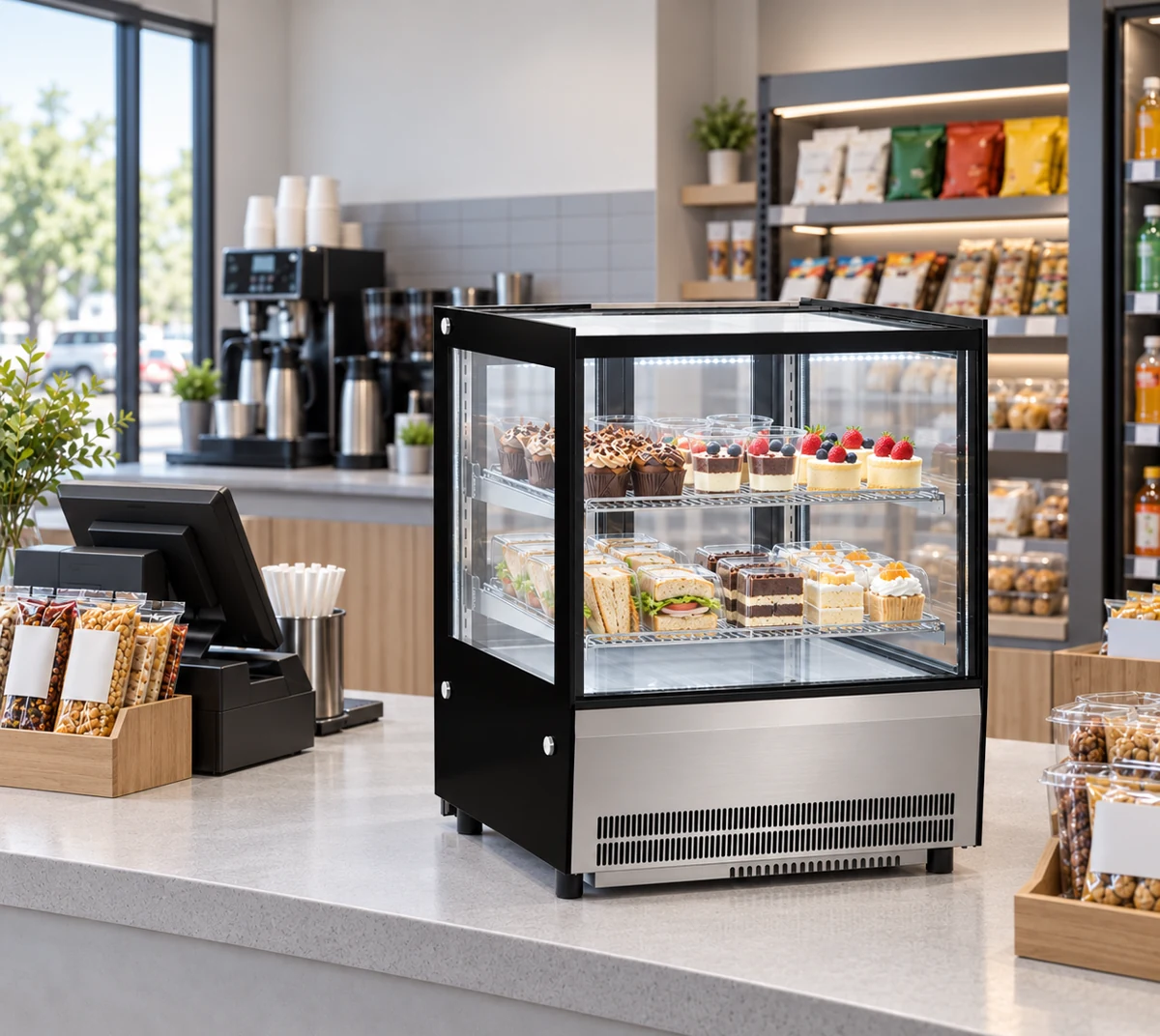
Use one row per model and destination. In this illustrative order, site A receives one GN-900RT countertop cake display and one GN-620FS beverage cooler. Site B receives one GN-900RT and one GN-1130SC ingredient rail. Site C receives two GN-1130SC rails. That produces two RT cabinets, three SC rails and one FS cooler, for six equipment units overall.
The model codes keep unlike appliances distinct throughout receiving. GN-900RT measures 900 × 530 × 730 mm, GN-1130SC measures 1130 × 405 × 280 mm, and GN-620FS measures 620 × 700 × 2018 mm. These are appliance dimensions. Ask for the actual packed dimensions, gross weights and package identifiers against each order line before preparing a collection or onward booking. A count of six appliances does not establish six packages.
Which documents should stay with an onward movement from the hub?
Prepare a destination allocation sheet linked to the accepted equipment order. For the hub route, identify the equipment received, its assigned final site and the next movement reference. Keep the supplier packing record with the hub receipt, then create an onward allocation identifying which actual package references travel to each site. If handling changes the packaging, preserve the connection between the original reference and the replacement record.
Site C provides a simple check: its allocation is two GN-1130SC rails. The site C receiving sheet should identify both units and their associated package records. Equipment intended for site B must remain distinguishable even though it uses the same SC model. Use destination labels and order-line identifiers in addition to model numbers so identical appliances do not lose their site assignment.
How do the final placement tasks differ between these three models?
GN-900RT and GN-1130SC are countertop appliances; GN-620FS is freestanding. At site A, receiving the RT cabinet and the FS cooler therefore leads to two different placement tasks. The RT needs its nominated supporting counter, while the 2018 mm-high FS needs its floor position and access route reviewed. Site B has two countertop appliances with different body depths and heights. Site C has two separate rail positions to identify.
Give every position its own code on the room plan. Request appliance weights, handling instructions, support requirements and installation spacing for the selected configuration. Name the party responsible for movement after the agreed transport endpoint. Unloading at a hub, unloading at a site entrance and placing an appliance at its final position are separate descriptions that belong explicitly in the proposal.
Does central receiving simplify the electrical equipment schedule?
The electrical schedule remains attached to the final installation, even when the cargo visits a hub. The three source models here all record 220-240V/50Hz supply. Their rated powers differ: 350 W for GN-900RT, 130 W for GN-1130SC and 210 W for GN-620FS. Site A therefore has 560 W of summed equipment ratings, site B has 480 W, and site C has 260 W. The complete order sums to 1300 W.
These arithmetic totals describe recorded ratings for the example allocation. They do not specify circuit design, starting current or measured energy consumption. Send the equipment schedule and proposed positions to the installer, and request configuration-specific electrical documents. Keep the final site reference on each line rather than assigning the whole electrical schedule to the temporary receiving hub.
How can pickup and delivery proposals be compared on the same basis?
Give each provider the same destination allocation, cargo documents and required endpoints. For direct movement, request a response for the equipment assigned to each final site. For central receiving, distinguish the initial hub handover from the onward legs. Ask who coordinates the hub receipt, who stores the equipment between movements and who releases it for each destination. Record the accepted scope for each leg beside its movement reference.
Compare the tasks included in each response before comparing commercial terms. A proposal ending at H leaves onward movement to arrange; a proposal ending at site A may still leave indoor positioning to arrange. Request the relevant handling and receiving documents without assuming that the words pickup or delivery include those activities. Retain provider acknowledgements with the same allocation revision used for the equipment order.
What should be sent with a central-versus-direct equipment inquiry?
Send Shaanxi Jinyu Kitchenware Co., Ltd. (陕西金宇厨具有限公司) the full model codes, unit quantities and destination allocation. Attach the two proposed route plans, the intended handover endpoint at every location and the final equipment positions. Identify which routing decision is still under review. Request packing data and configuration documents against the listed models, keeping the transport scope separately identifiable in the returned proposal.
When a destination allocation changes, update all affected records together. Moving one SC rail from site C to site B changes both site quantities and their equipment-rating totals, while the six-unit order total stays unchanged. Retain the earlier allocation with its revision label and issue the revised sheet to the parties preparing the movements. The model-to-site link should remain readable from inquiry through final receiving.