Buyer planning guide
Custom Bag Inquiry: Artwork Versions and Quantity Schedule
Allocate a custom bag inquiry across body colours, front/back artwork and quantities. Use a worked 180-bag schedule and a proof-change worksheet.
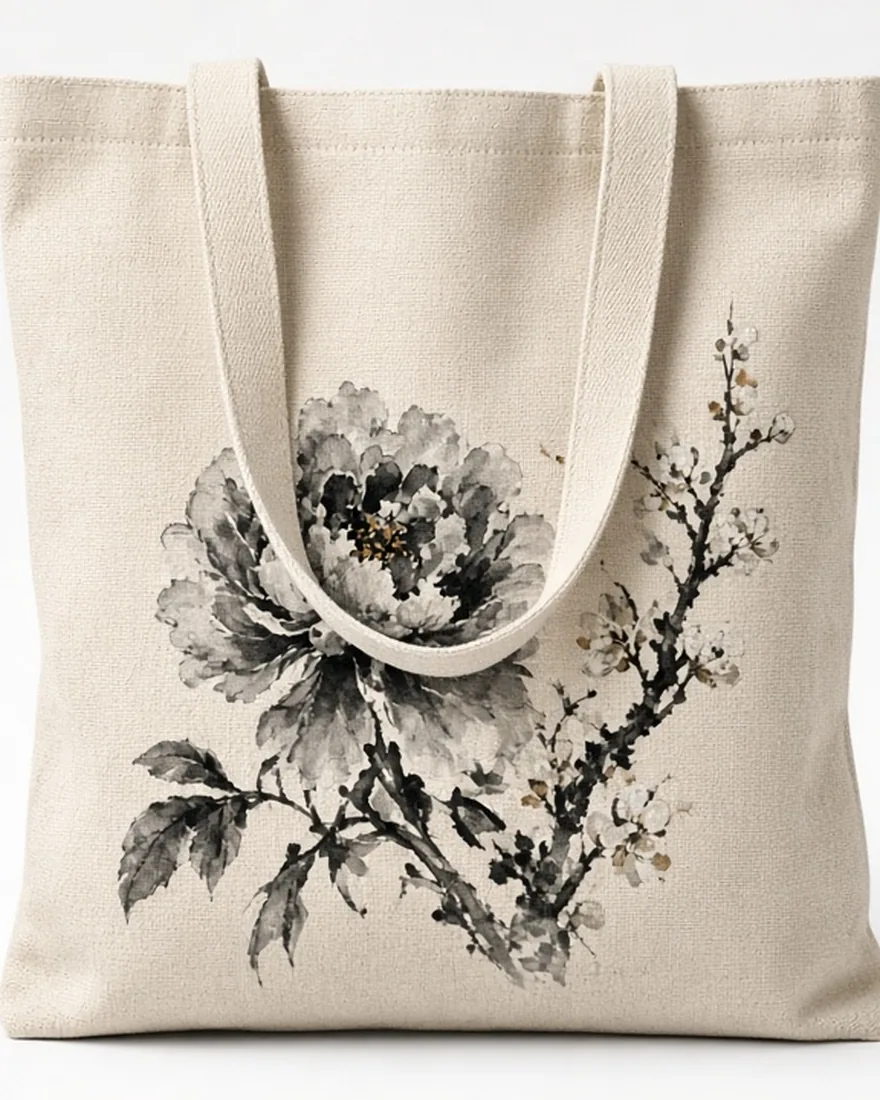
Worked request: three combinations, 180 bags
Illustrative buyer requests for one custom canvas body. Colours and artwork references describe the example; they do not identify stocked products.
| Line | Body drawing | Body colour | Front artwork | Back artwork | Bags |
|---|---|---|---|---|---|
| A | CANVAS-A R1 | Natural | BLOOM R2 | No print | 60 |
| B | CANVAS-A R1 | Natural | BLOOM R2 | EVENT R1 | 45 |
| C | CANVAS-A R1 | Black | BLOOM-LIGHT R1 | No print | 75 |
| Total requested bags | 180 | ||||
Body-colour check: Natural: 105 bags; Black: 75 bags.
| Face | Artwork revision | Requested placements |
|---|---|---|
| front | BLOOM R2 | 105 |
| front | BLOOM-LIGHT R1 | 75 |
| back | EVENT R1 | 45 |
The schedule has 180 bags and 225 requested printed faces: 105 BLOOM fronts, 75 BLOOM-LIGHT fronts and 45 EVENT backs. Printed faces are counted for checking the brief; the proposal describes how the printing is supplied.
Artwork proof and quantity-change worksheet
Copy these records into the inquiry. Add requested, offered and accepted columns, with a dated schedule revision and supporting file for each change.
| Record | Information to keep | Comparison |
|---|---|---|
| Line identity | Line ID, body drawing and body colour | Connect each proof to the requested combination |
| Front face | Artwork revision, print W × H and placement endpoints | Keep file identity and printed size together |
| Back face | Artwork revision or explicit no-print instruction | Compare the back independently from the front |
| Quantity | Requested quantity and offered quantity for this line | Recalculate total, body-colour and artwork subtotals |
| Proof or sample | Returned proof revision and sample/photo identifier | Record the combinations actually represented |
| Change record | Previous value, new value and affected line | Identify the schedule version addressed by the response |
How do I describe several artwork versions in one custom bag inquiry?
Give each combination of bag body, body colour and front/back artwork its own line. Attach the quantity to that combination. An overall project total helps check the arithmetic, while the separate lines tell the respondent which decoration belongs on which bag. Use a body drawing reference, named colour reference and artwork revision rather than relying on filenames such as final or latest.
For a custom canvas tote, the body drawing describes the requested dimensions, fabric, handles and closure. The artwork schedule then locates the requested decoration on that body. For a small non-woven request, start by asking about stock in the selected size and colour; a catalogue reference does not establish stock availability or printing suitability. Keep the construction response and artwork response connected by the same line identifier.
What does a worked artwork and quantity schedule look like?
The illustrative schedule below has three lines on one requested canvas body drawing, CANVAS-A R1. Line A requests 60 natural-colour bags with BLOOM R2 on the front and no back print. Line B requests 45 natural-colour bags with BLOOM R2 on the front and EVENT R1 on the back. Line C requests 75 black bags with BLOOM-LIGHT R1 on the front and no back print. These are example buyer requests, not stocked combinations or an offer.
The total is 180 bags: 60 + 45 + 75. Natural-colour bodies total 105 and black bodies total 75. A and B share one front artwork reference, covering 105 requested front prints, but only B requests the EVENT back print. Keep that distinction when comparing the returned proposal. The counts describe requested artwork placements; they do not calculate production operations or printing charges.
Which artwork dimensions and placement references should I include?
Name the front and back faces on the body drawing. For each printed face, supply the artwork file reference, revision, requested printed width and height, and the placement measured from named body edges. State whether the supplied file includes its own background. Identify any requested unprinted face explicitly. A blank cell can otherwise be confused with an unanswered artwork question.
Keep the finished body dimensions separate from the printed dimensions. Handles, seams, folds, pockets and closures can affect the available surface, so ask the response to show the proposed placement on the offered construction. Record colour references beside the artwork, including whether a physical reference is available. A screen preview communicates composition and requested position; retain the proposed print method and sample observations as separate records.
Can two body colours use the same artwork file?
They can share a requested file reference, but identify each body colour in the schedule and ask the proposal to show both combinations. The worked example uses BLOOM R2 on the natural body and a separately named BLOOM-LIGHT R1 on the black body. That naming makes the requested difference visible. It does not establish a printing method or guarantee the appearance of either combination.
When one file is intended for both colours, repeat its exact revision on both lines. Ask for a proof labelled with the relevant body colour, artwork dimensions and placement. Review fine lettering, background areas and the proposed colours against that combination. If the proposal changes the artwork for one colour, retain the requested file and offered file in separate fields so the change can be reviewed without altering the other line.
How do I record a proof change without changing the order total?
Suppose line B changes its back artwork from EVENT R1 to EVENT R2 while its quantity stays at 45. Update the back-artwork reference on B and record the replacement proof identifier. A remains 60, B remains 45 and C remains 75, so the project total stays 180. Natural remains 105 and black remains 75. This is an artwork revision, not a quantity transfer.
If instead 15 bags move from B to A, the revised quantities become A 75, B 30 and C 75. The total still equals 180, but EVENT back prints fall from 45 to 30. Record both the old and new line quantities, then recalculate body-colour and artwork-placement subtotals. Send the revised schedule with a new revision identifier and ask the response to identify which version it addresses.
What should I compare between the artwork proof and the bag sample?
Match the line identifier, body drawing, colour reference and artwork revisions first. Then compare the proposed printed width and height, face orientation and placement endpoints. Keep a front view and a back view of the same sample, labelled with its sample identifier. Add a close view of the artwork near a handle attachment, seam or closure when that relationship matters to the design.
Record observations against specific features: lettering, image orientation, placement, body colour or print appearance. Connect any requested change to its affected schedule line and proof revision. A sample illustrating line A does not also document the EVENT back print on line B. Ask which combinations the sample represents, and keep the response with the photographs and returned drawing.
What should I send JINYU with the completed schedule?
Send the dated line schedule, requested body drawing, colour references and artwork files to JINYU, Shaanxi Jinyu Kitchenware Co., Ltd. (陕西金宇厨具有限公司). Include quantities by combination and destination, the requested print dimensions and placement, and the proof or sample questions for each line. Identify any acceptable alternative separately from the preferred request.
Ask the reply to repeat the offered body, colour, artwork references and quantities against the same line identifiers. Compare the returned totals and the scope of any sample before selecting the proposal. Retain the requested schedule, offered schedule and accepted revisions together. If the bag body changes later, revisit artwork placement on that revised construction and update the linked proof reference.
Reference sources
- Build the stock or custom bag brief
- Prepare the component and material schedule
- Custom canvas tote projects
- Custom backpacks and travel bags
- Logo ordering route
- Compare requested and offered proposal scope
- Track changed artwork in a revised inquiry
Regional references support general planning; model-specific specifications come from the published JINYU model tables.