What should I compare when a sushi preparation counter arrives?
Put the accepted equipment offer, its component list and the shipment packing list beside the receiving record. Identify the cabinet by its full model code and the identification label on the delivered equipment. Record the package identifiers before assigning loose parts to that cabinet. A seven-position ingredient counter can arrive with more than seven pans when spares were ordered, so the cabinet position count and the loose-pan count need separate entries.
The example on this page follows one GN-1655SC cabinet and a requested set of nine pans: seven active and two spare. The returned offer in the example includes those nine pans and seven individual pan lids. These are illustrative purchasing quantities, not the standard contents of a JINYU shipment. Replace them with the accepted quantities for your own order before using the downloadable record.
Which cabinet details distinguish the SC and SB receiving lines?
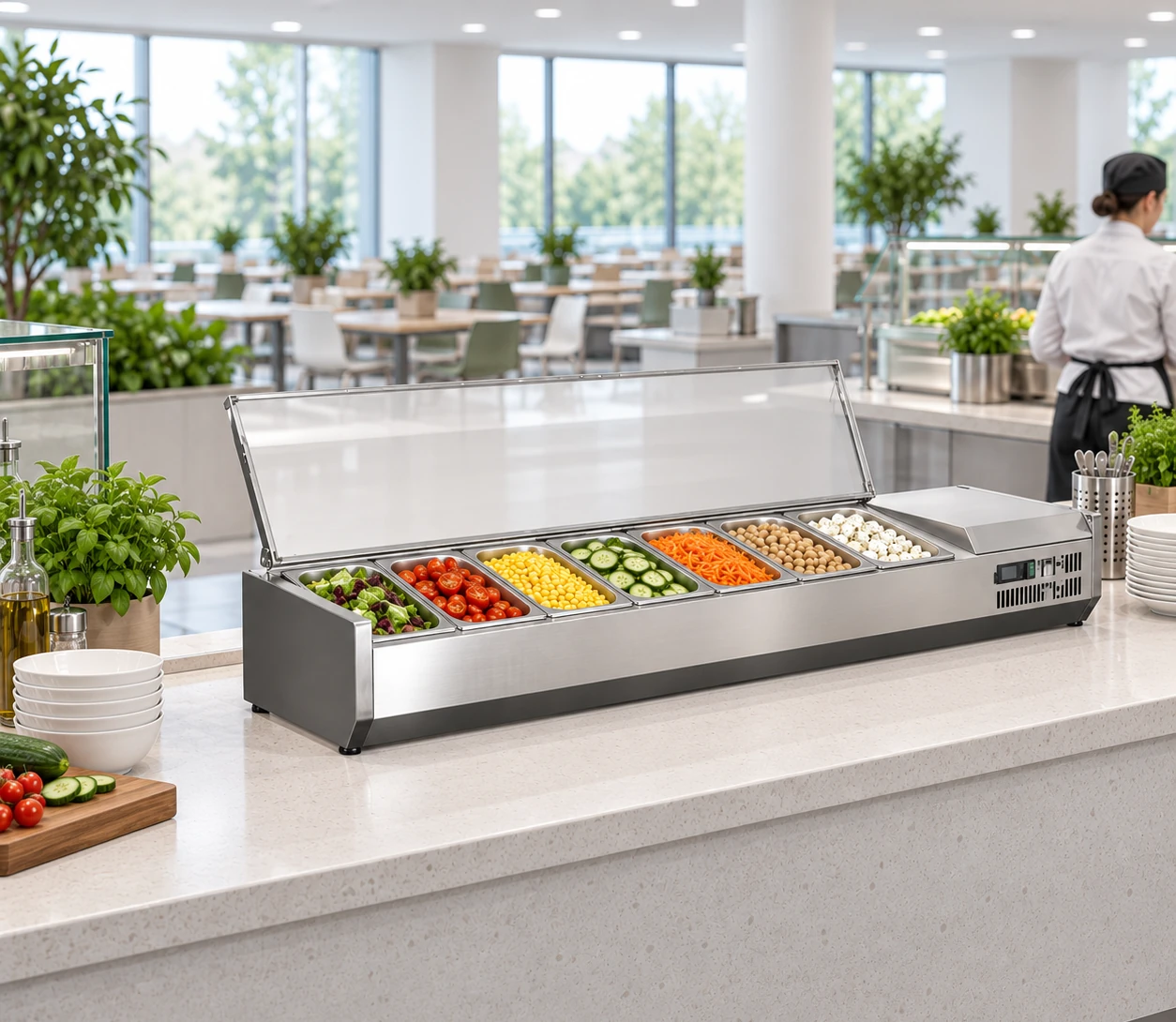
GN-1655SC measures 1655 × 405 × 280 mm, records seven 1/3 GN positions and lists 72 L capacity. Its cabinet cover is a hinged lift-up lid. GN-1655SB has the same recorded width, depth, pan count and capacity, but stands 450 mm high and has a glass cover. Preserve the suffix when matching a delivered cabinet to the order line; matching length alone leaves a significant equipment difference unresolved.
GN-1830SC is the eight-position alternative in the table. It measures 1830 × 405 × 280 mm and lists 82 L. All three records specify 220-240V/50Hz. Keep the delivered identification-label photograph with the receiving entry, including the actual electrical marking. If the marking differs from the accepted configuration, describe both readings in the discrepancy record and request the configuration documents for that particular unit.
How do I reconcile active pans, spare pans and individual lids?
Count the received containers by their offered part reference before allocating them to the station. In the worked example, the buyer requested nine pans, the offer listed nine and the receiver counted eight. Received minus offered is therefore minus one. The two spare pans were already included in the nine-pan total; adding them again would produce an incorrect expectation of eleven. Keep the seven active cabinet positions in the separate model record.
For individual lids, the example compares seven requested, seven offered and seven received, giving a zero quantity difference. That agreement covers quantity only. Record the part reference, container depth and any observed mismatch beside the count. A lid that has the right count but a different reference needs its own observation. Photograph the identifying feature and connect the image filename to the same row in the CSV.
How should a cabinet cover or support component appear in the record?
Keep the cabinet cover assembly distinct from the individual container lids. For the GN-1655SC example, one offered hinged-lid cabinet assembly is recorded as one received assembly. A photograph showing the cabinet with its lid closed helps identify that assembly, while an additional detail photograph can document an observed issue. The seven individual lids belong to the loose-component line and do not multiply the cabinet-cover quantity.
Support components need the itemization returned with the accepted offer. Where that list names separate parts, give each part its own row, quantity and drawing reference. The worked CSV includes a text-only support-document entry because this example does not specify support-bar quantities. Replace that entry with the actual offered component lines. This keeps the record usable without inventing a standard accessory kit from a cabinet photograph.
What photographs and observations make a discrepancy understandable?
Start with a package view that shows its identifying marks, then capture the cabinet label and the components laid out for counting. Use filenames that correspond to the record, such as R01-cabinet-label.jpg and R02-pan-count.jpg. Include a wider view before a close detail so the reader can locate the observed part. Record the count at the time of inspection, along with the receiver and date in the buyer columns.
The example pan row points to R02-pan-count.jpg and records eight received against nine offered. That is a specific quantity discrepancy. Surface marks, glass condition and a wrong part reference are different observations and belong in their own descriptions even when the quantity difference is zero. Photographs and counts document what was received; operating condition and installation checks need their own records and the equipment instructions.
How do I carry the receiving record into the supplier response?
Send the order reference, complete model code, affected component lines and their linked photographs to JINYU, Shaanxi Jinyu Kitchenware Co., Ltd. (陕西金宇厨具有限公司). Retain the accepted offer revision with the message so the requested response can address the same quantities and references. For the example shortage, identify the offered nine-pan line, the received count of eight and the photograph used for that count.
Use the response column to record the written answer and the document reference. Keep an initial observation visible when a later recount or additional package changes the result. A dated follow-up row can state the new count and identify the additional evidence. Once the components are reconciled, connect the received part references to the numbered ingredient-pan schedule. This gives the purchasing contact and kitchen team a shared link between the ordered equipment, delivered components and planned station.