Can I reuse my existing pans in a new topping fridge?
Identify the actual containers before asking for a cabinet recommendation. A recorded 1/3 GN position describes the format listed for a model; it does not document the rim, depth, handles or lid of a particular container already in your kitchen. Give each distinct pan a reference and photograph it from above, from the side and underneath. Include its current lid as a separate item so the response can identify the combination being reviewed.
This record follows existing containers through a model-specific drawing review. It complements the ingredient-position plan and the accessory inclusion checklist: one allocates ingredients, another lists requested components, and this one documents the physical containers. Keep buyer measurements in their own columns. Ask for a response against the exact cabinet code rather than transferring an answer between different models with the same nominal pan format.
Which topping fridge specifications belong beside the pan measurements?
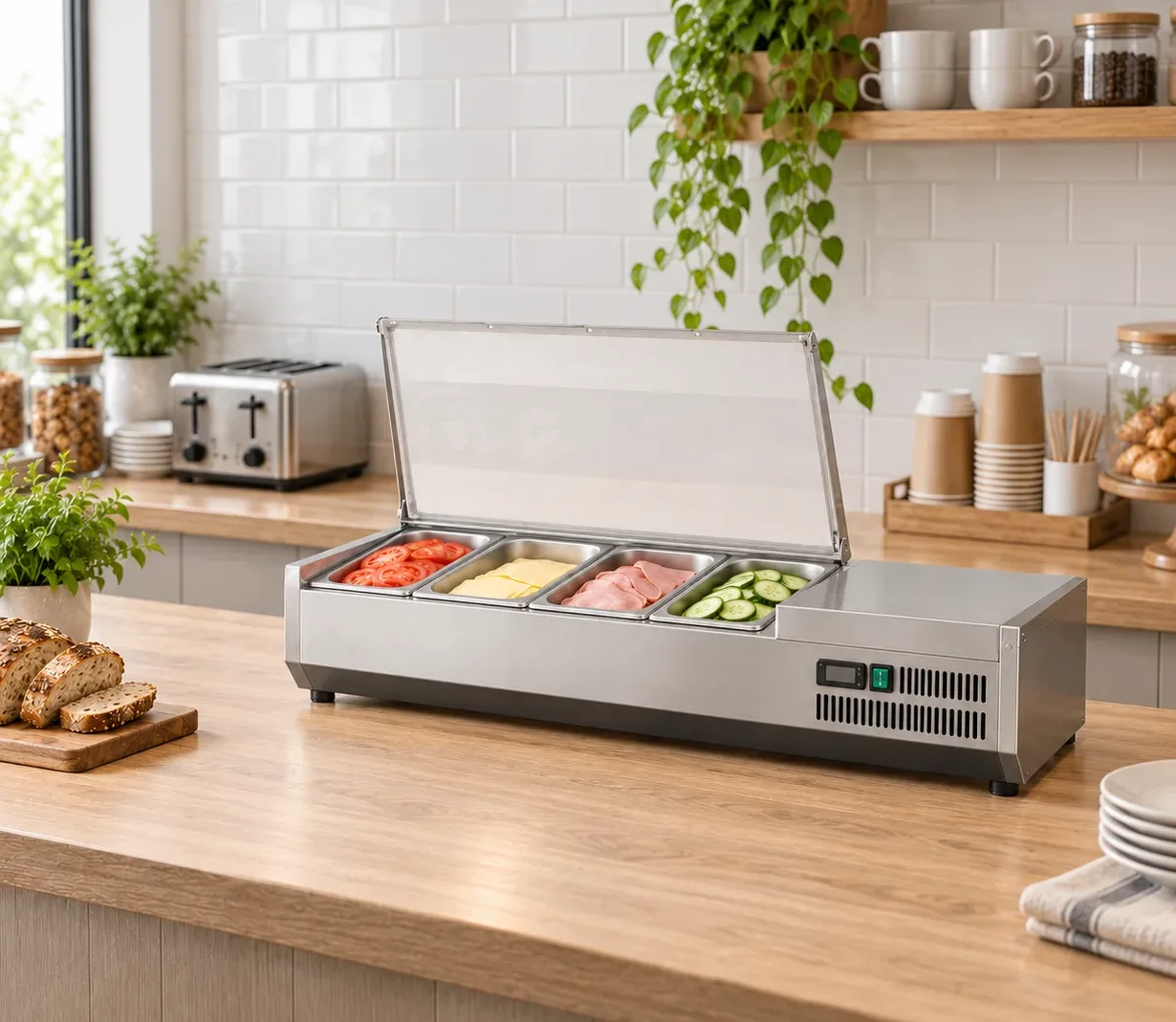
The three JINYU hinged-lid candidates shown here list four, five and seven 1/3 GN positions. GN-1130SC measures 1130 × 405 × 280 mm and records 42 L; GN-1305SC measures 1305 × 405 × 280 mm and records 52 L; GN-1655SC measures 1655 × 405 × 280 mm and records 72 L. Their common exterior depth and height help identify the cabinet family while the frontage and position counts differ.
Those figures belong in the equipment line. Place measured container dimensions underneath it, with a request for the offered support arrangement and usable space. A 280 mm exterior cabinet height supplies no maximum pan-depth value. Likewise, the 405 mm exterior depth supplies no container-opening dimension. Retain the model drawing reference beside the returned measurements so the comparison can be read without interpreting an exterior dimension as an internal one.
How should I measure the rim and body of a buyer-owned pan?
Label the two top-view axes on a photograph and keep the same orientation in the worksheet. Record the maximum outside rim length and width, then record the body dimensions beneath the rim as separate measurements. Include any projecting handle or fitting in another field. Photograph the endpoints used by the person taking each measurement. The drawing reviewer can then identify whether a figure refers to the supporting rim, the container body or an additional projection.
Keep one reference for each physically different container even when both carry the same nominal format marking. Record the marking as text alongside the measured dimensions. If several containers are intended for one row, show their references and proposed sequence on a plan. Ask for the support drawing to identify the relevant contact surfaces and openings. This gives the equipment response specific dimensions to address without assuming that a printed format label describes every detail.
How do pan depth, individual lids and the cabinet lid enter the review?
Measure container depth from a clearly identified top reference to the lowest outside point. Describe that reference in the record and show it in a side photograph. Measure the complete container-and-lid combination separately, including the lid handle. Keep the open container and the lidded combination as two recorded states; one dimension cannot describe both. Request a drawing or annotated response showing how the proposed container sits in the selected rail.
All three candidates here record a hinged lift-up cabinet lid. Ask for a review of that lid with the proposed pan and individual lid arrangement, plus the access required to lift out the container. The published cabinet height does not supply those operating positions. If a container is accepted only in a particular arrangement, retain the arrangement description beside the pan reference so it remains visible when the ingredient allocation or accessory list changes.
What does the worked 100 mm versus 150 mm pan-depth record establish?
The example uses two hypothetical buyer-owned containers, PAN-A and PAN-B. Both are recorded by the buyer as 1/3 GN, but their measured outside depths are 100 mm and 150 mm. PAN-B is 50 mm deeper because 150 minus 100 equals 50. These are illustrative buyer inputs, not dimensions of supplied pans or a statement that either fits GN-1130SC, GN-1305SC or GN-1655SC.
The worksheet deliberately leaves the returned opening, support and lid-response fields empty for completion from the actual equipment response. Attach the photographs and measured rim and body dimensions for each pan. A depth difference identifies a question for review; it does not establish bottom clearance, usable food volume or cooling performance. Preserve a separate answer for PAN-A and PAN-B, including any drawing reference, rather than replacing both with a general statement that existing containers are suitable.
How should I document lifting a pan out of the proposed rail?
Request a demonstration against the exact pan reference and cabinet configuration being considered. Show the container seated in the support arrangement, the cabinet lid in its working position, and the complete removal movement. Include any individual lid or handle used during that movement. Record which neighbouring positions are occupied so the demonstration describes the arrangement the kitchen intends to use. Keep the numbered position plan beside the photographs or video reference.
Write down the arrangement demonstrated and any differences from the request. A static photograph of a seated pan records only that position. The removal sequence addresses another buying question: whether the proposed container can be handled in the planned station layout. Ask for the relevant operating and loading instructions with the response. This record documents a purchasing review; it does not supply a model-specific pan-depth rating or a food-storage procedure.
What should I send with the final compatibility inquiry?
Send Shaanxi Jinyu Kitchenware Co., Ltd. (陕西金宇厨具有限公司) the selected model codes, pan-reference sheet, measured photographs and current position plan. Identify which existing pans you intend to retain and which components you want offered separately. Include the cabinet drawing revision used by the counter designer. Request an individual response for each pan and model combination, with the support arrangement, lid review and removal demonstration references kept together.
Carry accepted pan references into the accessory schedule and ingredient plan. If an alternative cabinet or pan is proposed, create a new revision and repeat the affected measurements against that combination. Retain the previous record so a change from PAN-A to PAN-B remains visible. The downloadable CSV provides measurement and response fields; the accompanying model links supply the published cabinet specifications and photographs for the three candidates.